For creators seeking steady, professional-looking footage with DSLR and mirrorless cameras, a 3-axis gimbal is essential. This guide highlights top 3-axis stabilizers suitable for Canon, Sony, Panasonic, Nikon, and Fujifilm setups. Each option balances payload, portability, and advanced features to support dynamic shooting across travel, interviews, and social media content.
| Product | Brand | Payload | Key Feature | Amazon Link |
|---|---|---|---|---|
| DJI RS 3 Mini | DJI | 2 kg (4.4 lbs) | Ultra-lightweight, Bluetooth shutter, vertical shooting | View |
| DJI RS 4 | DJI | 2 kg (4.4 lbs) payload | 2nd-gen vertical shooting, mode switch, smooth axis arms | View |
| DJI RS 4 Pro | DJI | 4.5 kg (10 lbs) | Higher torque, vertical switch, dual focus/zoom control | View |
| FeiyuTech SCORP 3 KIT | FeiyuTech | 3.5 kg max payload | AI tracking, detachable remote handle | View |
| Zhiyun Weebill S | ZHIYUN | Varies by setup | Compact sling design, strong compatibility | View |
DJI RS 3 Mini: Ultra-Portable 3-Axis Gimbal
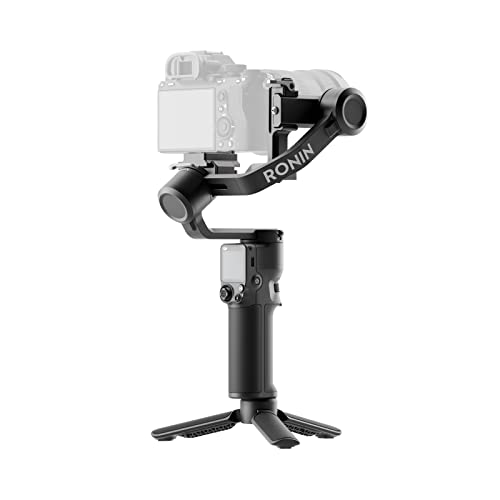
The DJI RS 3 Mini is a compact 3-axis stabilizer designed for lightweight camera setups, including popular Canon, Sony, Panasonic, Nikon, and Fujifilm bodies. With a tested payload up to 2 kg (4.4 lbs), it accommodates a broad range of lenses while remaining easy to carry. Its 795 g (1.75 lb) body makes it ideal for travel shoots and long sessions, while Bluetooth shutter control enables seamless photo and video capture without detaching the camera from the gimbal.
DJI RS 4: Versatile 3-Axis Stabilizer

The RS 4 expands on the company’s stabilizer line with a refined 2nd-gen native vertical shooting feature. It includes a user-friendly joystick mode switch to toggle between PF, PTF, and FPV modes, enabling precise framing during creative shoots. Teflon-coated axis arms reduce friction for smoother balancing across the three axes, improving stability with a wide range of camera configurations.
DJI RS 4 Pro: High-Payload 3-Axis Gimbal

The RS 4 Pro offers a 4.5 kg (10 lbs) payload, making it suitable for heavier mirrorless and cinema cameras. It delivers a 20% increase in motor torque thanks to carbon fiber axis arms, enabling reliable performance with demanding rigs. A remote dual focus and zoom motor control capability helps cinematographers adjust lenses without interrupting movement, preserving shot continuity.
DJI RS 4 Combo: 3-Axis Gimbal Kit

The RS 4 Combo pairs the RS 4 with essential accessories to streamline production. It maintains the 2nd-gen native vertical shooting capability and includes a 2-mode joystick switch for quick transitions between movement control and zoom. The combination emphasizes smooth balancing through Teflon-coated axis arms, helping operators achieve precise, steady results during dynamic shoots.
DJI RS 4 Pro Combo
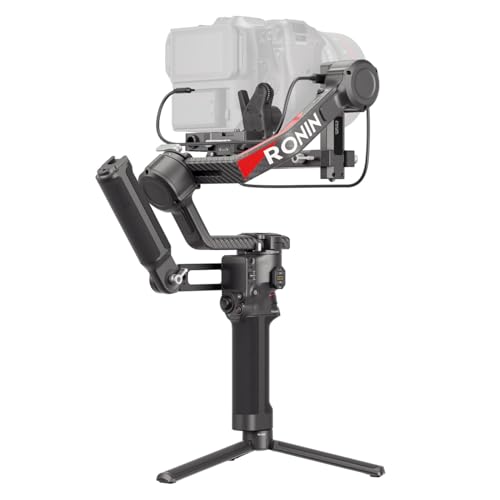
The RS 4 Pro Combo builds on the Pro platform with additional payload capacity and versatile control options. Its 4.5 kg (10 lbs) payload compatibility supports larger camera/lens setups, while the same improved torque and vertical shooting workflow help producers create content efficiently for social media and traditional productions alike. The included features support precise framing and flexible rig configurations.
Buying Guide: Key Considerations For 3-Axis DSLR Gimbals
- Payload Compatibility: Match the gimbal’s tested payload to your camera body and lens package. Heavier cinema cameras require higher-torque models like the RS 4 Pro or RS 4 Pro Combo.
- Vertical Shooting: If you publish vertical content, ensure the gimbal offers native vertical shooting or a quick, tool-free method to switch orientation without rebalancing.
- Balancing And Setup: Look for gimbals with smooth axis arms, low-friction materials (like Teflon), and easy balancing. A lighter setup saves fatigue during long shoots.
- Control Features: Joystick modes for zoom/pan, remote focus/zoom, and Bluetooth/shutter control can reduce interruptions and improve on-the-fly adjustments.
- Footprint And Portability: For travel and handheld use, lighter gimbals provide longer runtimes and easier handling, while still supporting a versatile range of cameras.
- Software And Diagnostics: Some models include intelligent tracking, AI features, and companion apps to fine-tune performance and automate tracking in busy environments.
- Accessories And Expandability: Consider whether the package includes essential accessories (tripod, quick-release plates, cables) or if you’ll need to purchase them separately for your camera system.
- Support And Compatibility: Check compatibility with your camera brand and any required control cables or adapters, especially for models that require specific connections for remote focus or zoom.
- Price-To-Performance: Balance your budget against payload, motor torque, and feature set. Higher-end models offer more power and flexibility but may exceed your typical shooting needs.
- Usage Scenarios: For travel vlogs, run-and-gun interviews, and studio-style shoots, prioritize a gimbal that emphasizes stability, quick orientation changes, and reliable battery life.