The following five camera systems represent strong options for different security needs, from wired systems with AI detection to solar-powered wireless kits. Each product is evaluated for coverage, reliability, night vision, ease of installation, and overall value for a typical American home or small business setting. Use this guide to compare features and choose a system that matches your property, budget, and preferred setup.
| Product | Brand | Key Feature |
|---|---|---|
| ANNKE 3K Lite Wired Security Camera System Outdoor | ANNKE | AI motion detection, 8-channel DVR, dual light, color night vision |
| aosu Security Cameras Outdoor Wireless 4Cam Kit | aosu | Solar powered, 2K color night vision, cross-camera tracking |
| Camcamp 4MP Dual Lens Wireless System | Camcamp | Dual-lens 360° coverage, color night vision, auto motion tracking |
| REOLINK Smart 5MP 8CH Wired PoE System | REOLINK | 5MP resolution, person/vehicle detection, 24/7 recording |
| Blink Outdoor 4 (3-Camera System) | Blink | Two-year battery life, wireless, 1080p live view |
Note: The table highlights five options that offer a mix of wired and wireless setups, so you can pick based on whether you prioritize reliability (wired) or flexibility and ease of installation (wireless). All products listed include features aimed at improving security monitoring for homes and small businesses in the United States.
ANNKE 3K Lite Wired Security Camera System

The ANNKE 3K Lite system delivers a wired security solution designed for steady, long-term surveillance. It supports AI Motion Detection 2.0, focusing on human and vehicle detection with flexible detection areas to reduce false alarms. This makes it easier to locate relevant moments in recordings through smart search features. The kit is designed to be compatible with multiple legacy camera formats (TVI, AHD, CVI, CVBS) in addition to IP cameras, enabling DIY upgrades or integration with existing hardware. The pre-installed 1TB HDD provides around-the-clock recording, and the H.265+ codec helps conserve storage and bandwidth. If you want a reliable, expandable wired system that can grow with your needs, this ANNKE option offers a balance of AI capability and proven durability.
Key considerations: Wired systems require more installation effort but tend to offer more consistent bandwidth and fewer wireless interference issues. The inclusion of dual light improves visibility in dark conditions, while the ability to connect with various camera formats offers flexibility for future upgrades.
aosu Security Cameras Outdoor Wireless 4-Cam Kit
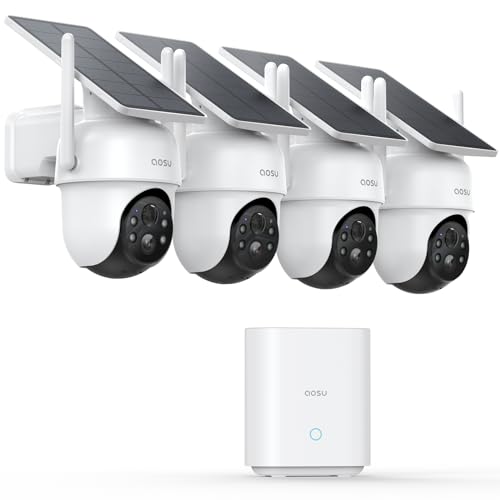
This wireless camera kit from aosu emphasizes solar-powered operation with built-in storage and a home base for encrypted local recordings. A notable feature is cross-camera tracking, automatically relating videos from the same event period to simplify reviews. The setup supports simultaneous live streams and the ability to monitor multiple outdoor cameras on one screen, which is useful for larger properties or those needing broad coverage. The solar panel is designed to deliver reliable power with minimal maintenance, making it a strong choice for locations where wiring is impractical or where ongoing battery replacement is a concern.
Considerations: Wireless systems require a stable Wi-Fi environment, and while solar power reduces maintenance, you should assess sun exposure and weather conditions in your area to gauge long-term reliability. Storage capacity and firmware updates are important for ongoing performance and security.
Camcamp 4MP Dual Lens Wireless System

The Camcamp dual-lens system emphasizes flexible, comprehensive coverage with a fixed wide-angle camera and a remote-controlled PTZ lens. This design minimizes blind spots by providing constant broad views while enabling targeted zoom and tracking of activity as needed. The system claims full-color night vision and 2K resolution for clearer detail, along with auto motion tracking and alert features via a dedicated app. This setup is ideal for properties where simultaneous wide-area surveillance and focused attention on motion events are essential, such as entryways, driveways, and yards.
Points to weigh: Wireless systems benefit from simple installs but rely on stable wireless networks and local power sources. Dual-lens configurations can be more cost-effective than buying separate wide-angle and PTZ cameras, offering a balanced approach to security without sacrificing detail or coverage.
REOLINK Smart 5MP 8CH Wired PoE System

The REOLINK system emphasizes crisp 5MP resolution and smart detection for people, vehicles, and animals, helping reduce nuisance alerts and focusing attention on genuine security events. The 8-channel PoE NVR simplifies the installation process by providing power and data over a single Ethernet cable to each camera, enabling reliable operation and easier scalability. The package is designed for 24/7 recording, capturing critical moments with substantial detail, which is valuable for evidence gathering and monitoring at homes, shops, or small offices.
Considerations: Firmware updates and camera placement are essential for maximizing the benefit of smart detection. The NVR’s capacity determines how long footage can be stored before overwriting, so plan storage growth if you expect extended surveillance windows.
Blink Outdoor 4 – Wireless Security Camera System

Blink Outdoor 4 focuses on battery-powered wireless cameras with long-lasting power and flexibility in placement. The system supports up to two years of battery life when using included AA lithium batteries and the Sync Module Core. It’s designed for quick setup and straightforward day-to-day monitoring, with 1080p live view and infrared night vision. While the system may lack some advanced on-device analytics found in higher-end wired systems, it offers ease of use, scalable coverage, and reliable wireless performance for smaller properties or renters seeking a low-maintenance option.
Purchase considerations: Wireless systems like Blink prioritize simplicity and quick deployment, but battery life and cloud storage costs can influence long-term operating expenses. If you require continuous recording and more granular detection, a wired or PoE option might be preferable.
Buying Guide: Key Purchase Considerations
- Wired vs. wireless: Wired (PoE or analog DVR) systems typically provide more stable performance, consistent power and bandwidth, and longer-term reliability. Wireless systems offer easier installation and flexibility but depend on Wi-Fi strength and battery life or solar charging in some cases.
- Detection capabilities: Look for AI-based human, vehicle, or animal detection to reduce false alarms. Consider the ability to customize detection zones and smart search tools to quickly locate events.
- Resolution and night vision: Higher resolutions (4MP, 5MP) give clearer footage, especially for identifying faces or license plates from a distance. Color night vision can provide better detail in low light compared with traditional black-and-white infrared modes.
- Storage and retention: Assess the included HDD/SSD capacity and whether the system supports larger drives. Consider cloud storage options and how long footage will be retained before automatic overwrites occur.
- Weatherproofing and durability: For outdoor installations, verify IP ratings (IP66/IP67) and operating temperature ranges to ensure reliability in your climate.
- Scalability and compatibility: If you anticipate growth, choose systems that support adding cameras or integrating with existing devices. Compatibility with various camera formats or ecosystems can simplify upgrades.
- App and remote access: A strong mobile app with real-time alerts, live view, and easy playback controls enhances monitoring flexibility when you’re away from home.
- Power options: Wired cameras often require a stable power source; solar-powered or battery-powered options are convenient but may require more planning around sun exposure and charging cycles.
In sum, the best choice depends on your property size, installation constraints, and how actively you want to monitor activity. Wired systems tend to excel in reliability and long-term retention, while wireless kits prioritize flexibility and quick setup. Consider a hybrid approach if your property presents both needs—for example, using wired cameras for core entry points and wireless cameras for expanded coverage in yards or outbuildings.