Finding the right camera harness for hiking helps you capture stunning scenes without the fatigue. The following selections emphasize comfort, weight distribution, quick access, and secure mounting—ideal for long treks, wildlife walks, and outdoor shoots. Each option is designed to reduce neck strain and keep gear ready at a moment’s notice, whether you’re using a DSLR or mirrorless setup. The table below highlights the five most relevant picks to the keyword, with quick takeaways for comparison.
| Product | Brand | Key Benefit |
|---|---|---|
| USA GEAR DSLR Camera Strap Chest Harness | USA Gear | Very comfortable neoprene design with quick-release buckles |
| Nicama NC-Vest Dual Camera Carrier Chest Harness | Nicama | One-size-fits-all with secure locking and instant release |
| Vigorport Cross Shoulder Harness | Vigorport | Ergonomic X-shaped straps for weight spread and stability |
| Nicama S-VEST Pro Dual Shoulder Harness | Nicama | Durable, rugged design with quick-release locking system |
| Cotton Carrier CCS G3 Harness System | Cotton | Twist & Lock Mount with dual-camera capability |
USA GEAR DSLR Camera Strap Chest Harness

The USA Gear chest harness is designed for hands-free use and balanced weight distribution. Its adjustable neoprene construction emphasizes comfort during long hikes, reducing neck and shoulder strain. Quick-release buckles simplify setup and removal, enabling rapid access to belongings or the camera itself. Dual-length sliding strap brackets accommodate photographers of varying sizes, making this harness a flexible option for different body types and kit configurations.
Nicama NC-Vest Dual Camera Carrier Chest Harness

The NC-Vest from Nicama provides a secure locking system with instant release and is described as one-size-fits-all. It supports 1 or 2 camera configurations, making it ideal for photographers who switch between bodies or lenses on hiking days. The design emphasizes comfort by minimizing neck contact, though proper angle guidance is advised during strap placement to prevent neck pressure during extended wear.
Vigorport Cross Shoulder Harness
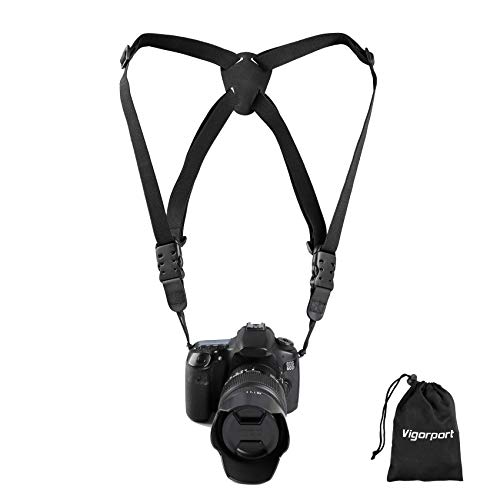
Vigorport offers an ergonomic X-shaped cross-shoulder design intended to spread camera weight across the shoulders, reducing fatigue during long treks. The elastic nylon straps include quick-release buckles and are adjustable to slide cameras into a comfortable viewing position. The harness emphasizes durability with real leather accents for added grip and sturdiness, aiming to keep the camera stable while walking or climbing.
Nicama S-VEST Pro Dual Shoulder Harness

The S-Vest Pro from Nicama is designed to hold a single camera securely with a rugged, sturdy construction. It features a secure locking system with instant release and notes about avoiding neck contact by adjusting strap angles. This harness is suited for photographers-on-the-go who prioritize rapid action readiness and reliable camera positioning for immediate shooting.
Cwatcun Professional Harness & Vest System

Cwatcun’s harness system focuses on triple safety with a locking main buckle, shock-absorbing strap, and an additional safety rope. It offers space for two lenses via 10 quick-access mounts and features a Y-shaped spine design to transfer 70% of the weight to the waist and back. The fabric is rated for outdoor use with water resistance and sweat-wicking properties, making it suitable for rugged hikes and events with varied weather conditions.
Cotton Carrier CCS G3 Harness System
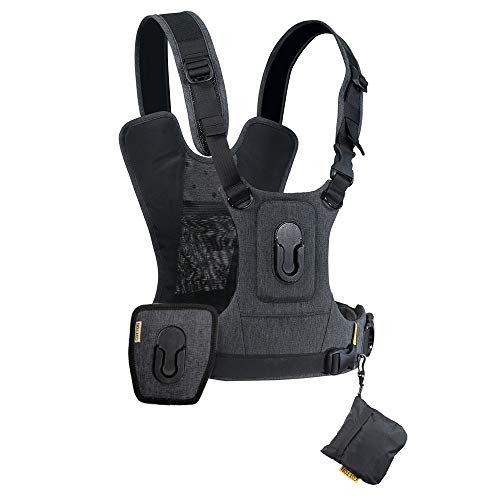
The CCS G3 is a renowned two-camera system featuring a patented Twist & Lock Mount for solid security. It distributes weight across the torso to ease neck and shoulder load, making it suitable for heavier DSLR and lens setups. This system supports two cameras and aims to keep gear balanced during long shoots, weddings, or wildlife outings where rapid camera changes matter.
Buying Guide: Key Purchase Considerations And Comparisons
- Weight distribution: Look for designs that transfer weight to the hips or waist rather than the neck. This reduces fatigue on extended hikes.
- Camera capacity: Decide between single-camera vapor or dual-camera configurations. Two-camera systems are helpful for switching bodies or lenses without removing the harness.
- Adjustability: Ensure straps and buckles accommodate your torso length, shoulder width, and clothing layers. Quick-release features speed setup and re-positioning.
- Material and comfort: Neoprene padding, breathable fabrics, and durable stitching improve all-day wear. Leather accents may add grip but can affect weight.
- Security features: Look for locking mechanisms, anti-slosh systems, and backup straps to prevent drops during movement.
- Weather suitability: Water resistance and sweat-wicking properties help during rain or humid conditions common on hiking trips.
- Compatibility: Verify compatibility with your camera system (DSLR, mirrorless, and sizes of lenses) to avoid balance issues or fit problems.
- Portability: Consider how easy the system is to pack when not in use and whether it folds or compresses for travel.
- Accessories: Quick-access mounts and accessory pockets add value for memory cards, batteries, and lens caps during treks.
- Long-term value: Higher-end systems with robust materials may offer better durability and resale potential for frequent hikers.
When evaluating options, balance comfort, security, and accessibility. For long day hikes or climbing segments, a dual-camera system with solid weight distribution can significantly reduce fatigue. If you frequently switch between camera bodies, a secure locking system and instant release can streamline your workflow. Weather resistance and durable stitching are essential for rugged outdoor conditions. Finally, ensure the harness fits your body type and gear configuration to maximize both safety and performance on the trail.