Whether you’re digiscoping through a spotting scope, filming wildlife, or capturing niche outdoor perspectives, the right camera mount can dramatically improve stability and framing. This guide highlights five versatile mounts that pair well with scopes, binoculars, and monoculars alike. Each option keeps gear secure, adapts to multiple mounting surfaces, and supports quick position changes for dynamic shots.
Product snapshot table (selected models):
| Product | Brand |
|---|---|
| SVBONY SV126 Car Window Mount | SVBONY |
| UTEBIT Bike Camera Mount | UTEBIT |
| tridaptor Universal Phone Scope Digiscoping Adapter | MOVE SHOOT MOVE |
| VICTORFIRE Universal Barrel Scope Phone Clamp | VICTORFIRE |
| Pedco UltraClamp Assembly | PEDCO |
SVBONY SV126 Window Mount for Scopes

The SV126 is a compact, all-metal and ABS mount designed for vehicle windows, spotting scopes, monoculars, binoculars, and SLR cameras. Its protective rubber pads guard glass surfaces, and the 1/4-20 tripod thread enables broad compatibility. Weighing about 333.5g and measuring 65mm x 55mm x 110mm, this mount travels easily in a backpack or photography bag, making it a practical on-road option for dynamic viewing sessions.
Key considerations include its rugged construction and the balance between portability and load capability. The clamp’s non-marring pads help preserve optics while delivering steady support for on-the-go shooting or observation. However, users should verify the combined weight of their camera body and lens to ensure the mount’s stability on rough roads or windy conditions.
UTEBIT Bike Camera Mount for Bikes and Motorcycles

This clamp-style mount attaches to bike or motorcycle handlebars with a wide 0.66–1.37 inch diameter range and supports up to 5.5 pounds. It features a 60-degree rotation and a universal 1/4-inch thread for adding tripods or other accessories. The versatile design accommodates action cameras and larger smartphones, enabling stable, multi-angle footage while cycling. Riders should consider vibration and wind exposure at higher speeds, which can affect footage—balancing speed with stability is key.
tridaptor Universal Phone Scope Digiscoping Adapter

The tridaptor from MOVE SHOOT MOVE offers a precise 3-axis adjustment system with up/down, left/right, and forward/backward controls. The all-metal aluminum body provides rigidity with minimal flex, ensuring stable alignment between smartphone cameras and telescope eyepieces. Rubber pads protect delicate optics, and XYZ fine-tuning knobs enable careful calibration for sharp digiscoping results. This is a strong option for steady, high-precision smartphone capture through scopes and monoculars.
VICTORFIRE Universal Barrel Scope Phone Clamp
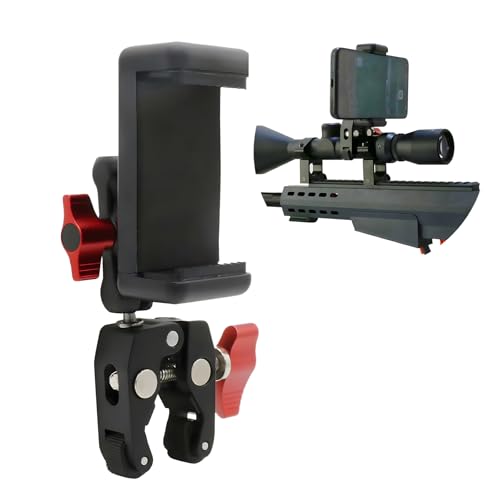
Designed to mount phones or cameras on riflescopes, bikes, and handlebars, the VICTORFIRE clamp supports tubes from 13 to 60 mm in diameter and offers a maximum load around 1.5 kg (3.3 lb). Quick-attach and release knobs enable rapid repositioning, which is beneficial for switching viewpoints during a hunt or ride. Its primary strength lies in rapid reactivity and broad surface compatibility, though users should ensure the clamp’s grip remains secure on uneven or slick surfaces to prevent movement during shot or run sequences.
Pedco UltraClamp Assembly for Cameras and Scopes

The Pedco UltraClamp provides a versatile 360-degree swivel and a sturdy ball-and-socket head for dynamic positioning. It attaches to round and flat surfaces up to 4 inches thick, including handlebars, car windows, railings, and tables. This flexibility makes it a solid choice for mounting a camera, spotting scope, or binoculars in variable environments. The clamp is particularly useful when a fixed, broad-angle mount is needed, but it may require careful setup on very smooth or uneven surfaces to maintain stability.
Buying Guide: Key Considerations for Choosing a Scope Mount
- Mounting surface compatibility: Assess whether you need window clamps, rail mounts, handlebars, or tripod threads. Ensure the mount fits the surface diameter and texture where you’ll use it most often.
- Weight capacity and balance: Match the mount’s load rating to your gear (scope, monocular, or camera). Heavier rigs require sturdier build quality to minimize drift and shake.
- Adjustment range and precision: Look for multi-axis adjustment (horizontal, vertical, and tilt) and fine-tuning knobs for precise alignment with eyepieces. 3-axis designs offer best control for digiscoping.
- Material and protection: Aluminum and steel builds with rubber pads minimize scratches on optics and surfaces. High-quality padding helps preserve delicate gear during movement.
- Portability vs. stability: Ultra-compact mounts excel for travel, but larger mounts often deliver better stability in wind or rugged terrain. Consider your typical shooting conditions.
- Weather and durability: For outdoor use, consider corrosion resistance and weatherproofing features. A mount that resists moisture and dust will last longer in field conditions.
- Accessory ecosystem: Ensure compatibility with your eyepieces, smartphones, and cameras. A broad 1/4-inch thread standard increases cross-compatibility with tripods and adapters.
- Ease of setup: Quick-release mechanisms and intuitive knobs save time in the field, allowing you to focus on composition and subject tracking.
When selecting a mount, balance your anticipated use case—whether you need rapid repositioning for action shots, or precise alignment for digiscoped images. Evaluate the environment, gear weight, and desired mounting surface to choose a model that provides reliable stability and flexible positioning across sessions.