For budding filmmakers and indie creators, choosing the right camera can make a noticeable difference in mood, texture, and storytelling pace. This guide focuses on accessible, film-friendly options—from reusable 35mm cameras to instant film and compact point-and-shoots—that are well-suited for short films. Each pick offers distinctive characteristics like built-in flash, wide-angle lenses, or simple operation, helping you capture cinematic scenes without a steep learning curve.
| Product | Brand | Type | Notable Feature |
|---|---|---|---|
| KODAK EKTAR H35 Half Frame Film Camera | KODAK | Half-frame 35mm | Twice as many exposures per roll |
| Kodak Funsaver One Time Use Film Camera (2-pack) | KODAK | Disposable 35mm | Bright, vibrant 800-speed film |
| Fujifilm Instax Mini 12 Instant Film Camera | Fujifilm | Instant film | Automatic exposure and flash control |
| RETO Ultra Wide and Slim 35mm | RETO | 35mm reusable | 22mm ultra-wide lens |
| Kodak M35 35mm Film Camera | KODAK | 35mm reusable | Fixed-focus, built-in flash |
Note: The following selections prioritize practicality, versatility, and image texture suitable for storytelling in short formats. Each section includes a concise overview, key features, and practical considerations for production contexts such as lighting, framing, and ease of use in fast-paced shoots.
KODAK EKTAR H35 Half Frame Film Camera
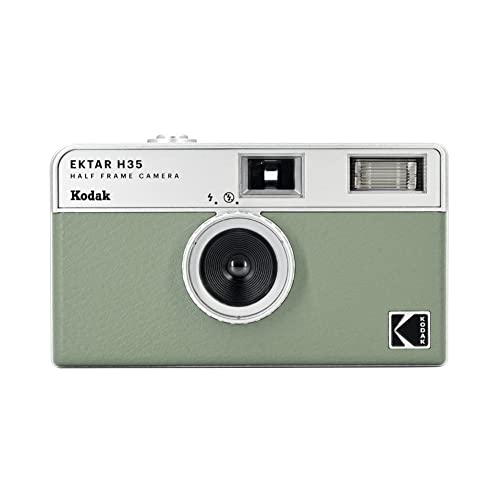
The KODAK EKTAR H35 is a lightweight, pocket-size option that doubles the number of frames per roll with half-frame shooting. This can be advantageous for short films that require quick coverage or experimental ratios. Its simple operation makes it accessible for crew members who may not be film specialists. A built-in flash adds versatility for indoor scenes or dusk shoots, controlled by a ring around the lens. The camera is ideal for documentary style shots, b-roll inserts, and on-the-go production where portability matters.
Kodak Funsaver One Time Use Film Camera (2-pack)

This two-pack offers a simple, ready-to-film option for quick takes, with 27-exposure film and Kodak 800 speed for brighter colors. The Fun Saver is suited for capture-on-the-spot moments, test shoots, or secondary angles where a lightweight, non-technical device is preferred. It provides reliable results with minimal setup, making it viable for time-constrained productions or casual scenarios where quick turnarounds are essential.
Fujifilm Instax Mini 12 Instant Film Camera

The Instax Mini 12 delivers instant, tangible frames with auto exposure and built-in flash control. While not a traditional movie camera, its instant prints can be used for on-set mood boards, production design references, or narrative inserts in a short film. The camera’s compact size and selfie-friendly features also support behind-the-scenes documentation and promotional stills during a shoot.
RETO Ultra Wide and Slim 35mm

The RETO Ultra Wide and Slim 35mm camera centers on an expansive 22mm wide lens, enabling broad scene captures and environmental storytelling. Its reusable design suits ongoing short-film projects, especially in urban or landscape settings where wide panoramas contribute to narrative scale. It’s positioned as a beginner-friendly option, with an emphasis on ease of use and straightforward operation for quick scene coverage.
Kodak M35 35mm Film Camera

The Kodak M35 offers a fixed-focus lens, built-in flash, and a simple optical viewfinder for straightforward framing. Compatible with 35mm color or black-and-white film, it’s a practical choice for establishing shots, quick candid scenes, and rehearsals on a tight schedule. Its battery dependency is minimal, making it reliable for field shoots where power sources are limited.
Canon New EOS Kiss (Rebel G) SLR Film Camera

The Canon EOS Kiss Rebel G offers autofocus and a 35-80mm lens, providing more control over the focus and depth of field. As a renewals option, it can be a solid bridge between older film aesthetics and more precise focusing for scenes involving actors and dynamic movement. Its intuitive controls and clear display support production teams new to film-era workflows, enabling reliable coverage with traditional SLR versatility.
Canon Rebel 2000 SLR Film Camera

The Canon Rebel 2000 is a classic 35mm SLR with a 7-point autofocus system and built-in flash, designed for reliability in varied lighting. For short-film crews, this camera can provide crisp focus for character-driven scenes, with familiar handling that reduces the learning curve for operators migrating from digital or newer film formats. It’s suitable for controlled studio setups or on-location shoots where depth of field and light control matter.
Buying Guide: Key Purchase Considerations And Comparisons
- Film format and resolution: 35mm cameras offer classic grain and latitude for narrative texture, while half-frame cameras can double exposure options for experimental shots.
- Lens capabilities: Wide-angle lenses (like 22mm RETO) expand environmental storytelling; standard or zoom ranges support a variety of shot types from close-ups to landscapes.
- Ease of use: For production teams with limited film experience, simple fixed-focus or disposable cameras provide predictable results with minimal setup.
- Lighting considerations: Built-in flashes add flexibility for low-light scenes, but plan additional lighting or reflectors for controlled aesthetics in interiors.
- Reliability and availability of ammo: Ensure film stock and accessories are easy to source; disposable cameras and reusable bodies can reduce on-set risk when supplies run short.
- On-set workflow: Instant prints (Instax) can serve as production design references or mood boards, while traditional film cameras require scanning and processing pipelines after shooting.
- Budget and crew roles: Selecting multiple film formats can diversify texture without a large investment. Assign a dedicated operator for each camera to maintain shot consistency.
- Post-production impact: Optical characteristics, grain patterns, and color response vary by camera; test shoots help align post workflows with the intended aesthetic.
- Durability and handling: Compact cameras are portable but can be delicate; protect gear with cases and plan for weather and dust exposure in outdoor shoots.
- Creative strategies: Use wide lenses for establishing shots, standard lenses for dialogue, and specialty angles (half-frame or instant prints) to add stylistic layers without extensive gear.