Finding the right CCD camera for telescope use can transform raw stargazing into detailed celestial imaging. This guide highlights five highly compatible models, covering beginner-friendly options and more advanced setups. Each choice emphasizes ease of use, image quality, and reliable performance for planetary, lunar, and deep-sky capture. Compare features, connectivity, and sensor performance to decide which camera best fits your telescope and observing goals.
| Product | Brand | Sensor / Type | Best For |
|---|---|---|---|
| 64GB Digital Eyepiece Telescope Camera | Unalace | 2K HD video, 16MP stills | Beginner-friendly astrophotography |
| SVBONY SV105 | SVBONY | IMX307, 1.25″ eyepiece | Lunar & planetary imaging |
| SVBONY SV305C | SVBONY | IMX662, 1.25″ | Planetary and EAA |
| Alstar 1.25″ Flip Mirror | A ALSTAR | Flip mirror with eyepiece adapter | Precise focusing & framing |
| SVBONY SC002 | SVBONY | 1080P, 37-56mm | Digiscoping & birding |
Note: The listed products cover a range of needs—from simple plug-and-play eyepiece cameras to more specialized capture aids. Each entry includes a quick reference to compatibility, control options, and targeting capabilities to help you pick a model that aligns with your telescope, observing style, and imaging ambitions.
64GB Digital Eyepiece Camera With Live View

The Unalace eyepiece camera offers simple installation on 25–50mm telescope eyepieces. Its plug-and-rotate design requires no tools, which makes setup quick for beginners and casual observers. Built-in WiFi creates a hotspot that smartphones can join directly, enabling live HD streaming and remote control via the companion app. This model captures 2K video and 16MP stills, with time-lapse and timed recording options for hands-free sessions. It’s a practical entry point for those starting astrophotography or wildlife observation through the scope.
Key features include universal fit, wireless control without internet, and the ability to record both high-resolution video and high-detail still images. The camera’s combination of live-view streaming and offline control helps you frame targets precisely while monitoring exposure in real time. While it’s not a high-end astrophotography workhorse, it provides reliable results for planetary views, star fields, and educational demonstrations.
SV105 Telescope Camera for Beginners
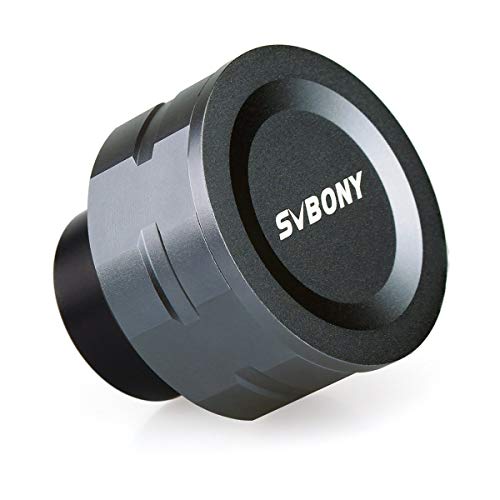
SVBONY’s SV105 is a straightforward electronic eyepiece designed for astronomy starters. The camera integrates with 1.25″ eyepieces and supports lunar and planetary imaging, allowing quick capture of bright targets. It streams real-time video to a laptop or PC without requiring complex drivers, and it works with widely used software such as Sharpcap on Windows or AstroDMx on Linux. Its plug-and-play design and immediate feedback help new users learn composition, focus, and exposure control, while keeping the process accessible and affordable for ongoing exploration.
Users benefit from a simple workflow: point at the Moon or a bright planet, record a quick video, then review frames on a computer. The SV105 is well-suited for students, hobbyists, and anyone building foundational sky imaging skills. While not intended for deep-sky imaging, it serves as a practical gateway into electronic eyepiece photography and basic video capture of celestial targets.
SV305C Astrophotography Camera

The SV305C is a color entry-level telescope camera built around the IMX662 sensor. It emphasizes performance in planetary and lunar photography and is particularly suitable for EAA (electronically assisted astronomy). The 1.25″ form factor is compatible with a wide range of refractors and reflectors. The sensor’s back-illuminated design and improved red spectral sensitivity help reduce overexposure in bright targets, while maintaining manageable noise levels. Its lightweight design and low learning curve make it a practical choice for beginner-to-intermediate astrophotographers who want reliable, real-time imaging from their telescope.
With SV305C, imaging strategies focus on high-contrast planetary features and lunar surface details. Users can expect clear frames with enhanced red sensitivity, enabling better short-exposure captures without specialized filters. This model is compatible with standard capture software on multiple platforms, expanding its accessibility for hobbyists who may diversify operating systems. It’s a solid bridge between basic eyepiece cameras and more advanced dedicated astrograph sensors.
Alstar 1.25 Inch Flip Mirror For CCD Cameras

The Alstar 1.25 inch astrophotography flip mirror combines precise framing with efficient focusing. By keeping a target object centered in both the eyepiece and the camera chip, this tool simplifies alignment and reduces refocusing when switching between eyepiece viewing and camera capture. The 45-degree flip mirror design allows you to tilt to the viewing position while maintaining parfocal alignment through a helical focuser. This setup is especially helpful for users aiming to achieve accurate camera focus without lengthy adjustments, ensuring sharp star images and consistent framing across sessions.
Users benefit from a straightforward workflow: you’re able to lock onto the exact focus point and maintain correct camera positioning easily. The device supports precise focusing with minimal drift, a key advantage for longer subs and high-magnification work. The flip mirror also helps maintain a comfortable observing posture by keeping the eyepiece and camera aligned, reducing headaches and fatigue during extended sessions.
SVBONY SC002 Wireless Eyepiece

The SVBONY SC002 is a wireless electronic eyepiece designed for digiscoping and wildlife observation. Its 1080P HD recording, 3x digital zoom, and 2MP sensor deliver clear, real-time footage through a digital connection. It supports 10 meters of wireless live view and works with Android, iOS, and HarmonyOS through the SvbonyCam app. This device is ideal for bird watching and quick telescope-to-device sharing, offering flexible angles and mobile control for field use. The 32GB variant provides ample storage for longer sessions and time-lapse opportunities.
In practice, the SC002 emphasizes convenience and portability. It’s particularly appealing for observers who value mobility or want to document terrestrial scenes and distant wildlife from a telescope setup. The camera’s combination of wireless control and multi-OS app support makes it easy to set up, frame shots, and capture moments without tethering to a computer, though it’s more oriented toward digiscoping than deep-sky astrophotography.
SVBONY SC311: Lunar Imaging Focus

The SVBONY SC311 is a dedicated WiFi telescope camera designed for lunar photography and planetary imaging. The IMX662-based design emphasizes stable power delivery and reliable antenna placement to ensure consistent connections. While it excels at Moon capture, the camera is not optimized for broad deep-sky targets. It’s best used in tandem with a telescope mount and suitable tracking settings to maximize frame stability. This camera benefits users seeking a dedicated lunar-imaging tool with easy wireless access and straightforward operation for quick moonshot sessions.
Important considerations for SC311 include its reliance on pairing with a telescope for imaging sessions and the need for proper power management. For those focused predominantly on lunar and planetary views, SC311 offers a focused, convenient option with dependable WiFi transmission and user-friendly software compatibility across devices.
SVBONY SC715C Planetary Camera

SVBONY’s SC715C introduces a high-detail planetary imaging option with the IMX715 sensor and 1.45μm pixel size. The camera’s 512MB DDR3 cache minimizes image delays, supporting high-definition captures of Moon and planets. It provides a capable balance of dynamic range and low readout noise, enabling crisper planetary videos and stills without requiring a separate Barlow lens for some targets. The included software supports streamlined workflow and efficient data handling, enhancing the user’s ability to capture and process planetary sequences with confidence.
Key advantages include its robust image quality, low noise under challenging illumination, and a practical workflow for planetary imaging. This model is well-suited for enthusiasts aiming to push into more demanding planetary detail, while remaining accessible through a straightforward software interface and dependable performance on compatible 1.25″ telescope systems.
Buying Guide: Key Purchase Considerations
- Sensor size and pixel pitch: Larger sensors and smaller pixel sizes can improve detail and light sensitivity, but may require higher-quality optics and stable mounts.
- Interface and compatibility: Look for cameras that match your eyepiece size (1.25″ is common) and offer straightforward software support across Windows, macOS, and Linux.
- Connectivity: Wired vs. wireless options affect convenience and latency. Wireless eyepieces excel for quick framing and field use, while wired options may offer lower latency for live viewing.
- Software ecosystem: A strong software suite (e.g., Sharpcap, AstroDMx, or manufacturer apps) helps with live view, stacking, alignment, and post-processing.
- Power and storage: Decide between internal storage options or external drives, and consider battery life for field sessions or observatory use.
- Mount and tracking compatibility: For longer exposures and deep-sky imaging, a stable equatorial mount with accurate tracking reduces star trails and image blur.
- Use case balance: If you mainly image the Moon and planets, prioritize high frame rate and low readout noise. For deep-sky targets, prioritize dynamic range and cooling (if available).
- Budget and future-proofing: Start with user-friendly options to learn core techniques, then upgrade to cameras with larger sensors, better noise performance, and advanced features as needed.
These considerations help you choose a camera that aligns with your observing goals, skill level, and telescope configuration. Whether you want quick lunar videos, planetary detail, or entry-level deep-sky imaging, the right CCD camera can enhance your telescope’s capabilities while fitting your workflow and comfort level.