For photographers venturing into night skies and long-exposure landscapes, a reliable equatorial mount is essential. The right mount stabilizes tracking, allows precise polar alignment, and supports a range of camera setups from compact mirrorless bodies to DSLRs. Below is a curated guide to five standout equatorial mounts and accessories that fit a variety of needs—from portable travel setups to advanced multi-processor tracking systems. The selections emphasize stability, ease of use, and compatibility with common camera gear.
Summary of Selected Products
- ZWO Seestar Tripod Head TH10 EQ Wedge for Seestar Smart Telescope
- Sky-Watcher Star Adventurer 2i Pro Pack – Motorized DSLR Night Sky Tracker
- iEXOS-100-2 PMC-Eight Equatorial Tracker System
- Equatorial Telescope Mount, Aluminum Alloy—Adjustable 90° EQ Mount
- Sky Watcher Star Adventurer GTI Mount Kit with GoTo
ZWO TH10 EQ Wedge Tripod Head For Seestar

The ZWO TH10 EQ wedge is designed to enhance Seestar setups by delivering precise polar alignment and stable tracking in an ergonomic package. It is compact enough to support portable field work and pairs with Seestar S50 or S30 configurations as part of an adaptable astro-imaging rig. The wedge emphasizes a fluid equilibrium during motion, helping photographers achieve smooth panning and tilt for both stills and video. Its hydraulic damping system supports controlled movements, reducing vibrations that can degrade long exposures.
Key features: Elevates EQ mode with accurate tracking; compact and portable at about 411 g (0.91 lb); hydraulic damping for smooth operation. These attributes make the TH10 a practical upgrade for Seestar-centric users who want stability without sacrificing travel convenience.
Sky-Watcher Star Adventurer Latitude Base
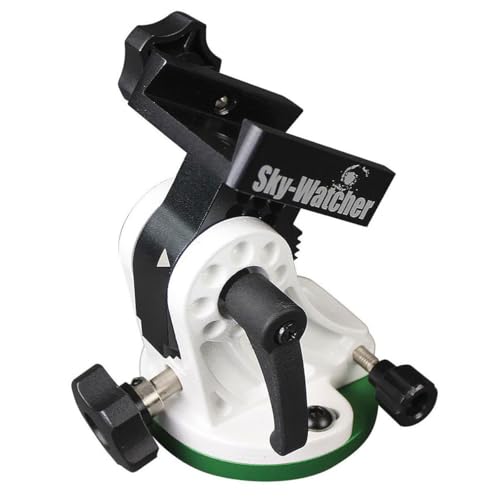
The Star Adventurer Latitude base is a compact, durable option compatible with V-style dovetail plates and equipped with micro-adjustment knobs for fine-tuning alignment. This base provides essential support for lightweight astrophotography on compact setups, enabling precise tracking with a portable form factor. It’s well-suited for travelers who need a reliable mount that won’t weigh down their pack and can still yield sharp, long-exposure images of the night sky.
Key features: V-style dovetail compatibility; micro-adjustment knobs for precise leveling; designed for portable night sky work. The Latitude base is ideal for photographers seeking dependable performance without the bulk of a larger mount system.
Sky-Watcher Star Adventurer 2i Pro Pack
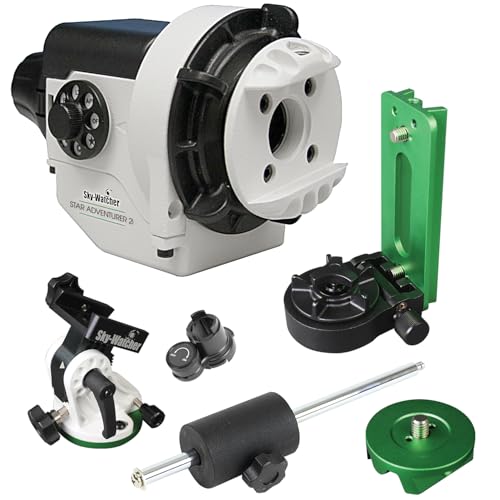
The Star Adventurer 2i Pro Pack represents a modern evolution of portable tracking mounts, offering motorized tracking for wide-field nightscapes, time-lapse sequences, and panoramas. Its modular design supports integration with existing tripods, making it flexible for different shooting scenarios. The 2i includes Wi-Fi for smartphone control via Sky-Watcher’s SAM Console, enabling remote operation and streamlined capture workflows. This setup is particularly attractive for landscape photographers who want reliable star and Milky Way imagery with convenient app control.
Key features: Motorized, portable platform for wide-field astrophotography; modular design for tripod integration; Wi-Fi for app control. The 2i Pro Pack balances portability with enhanced capabilities for more ambitious night-sky projects.
iEXOS-100-2 PMC-Eight Equatorial Tracker

The iEXOS-100-2 PMC-Eight system is a standout for users seeking a near-robotic level of control in an all-in-one tracker. It integrates eight CPUs that independently tackle defined functions to deliver fast timing intervals and responsive performance. Clutched dual-axis worm gears and quiet stepper belt drives contribute to smooth tracking, while the ExploreStars app offers intuitive navigation and alignment routines. This system is well-suited for serious astrophotographers who want precise, repeatable performance and robust software support.
Key features: PMC-Eight multi-processor architecture; dual-axis clutched worm gears; ExploreStars app for GoTo-style operation. The iEXOS-100-2 provides a highly capable foundation for advanced astrophotography workflows.
Equatorial Telescope Mount, Aluminum Alloy

This aluminum alloy equatorial mount emphasizes versatility and compatibility. It’s designed to fit various models and can serve as a replacement or upgrade for existing setups. The adjustable 0° to 90° angle range helps observers and photographers capture celestial events from different perspectives. A built-in 3/8-inch threaded base simplifies mounting on most standard tripods, ensuring stable operation without complex adaptations. This mount is a pragmatic option for hobbyists who want a robust, adaptable platform for both observing and imaging.
Key features: Adjustable 0°–90° tilt; 3/8-inch threaded base for tripod mounting; broad compatibility. The FOSA mount emphasizes straightforward usability and broad integration with common gear.
Sky-Watcher Adventurer GTi Kit

The Star Adventurer GTi Kit brings GoTo tracking to a compact, portable package. It includes a complete GoTo mount head along with a compatible tripod and a pier extension for stable, ground-level control. The built-in polar scope with an illuminator aids alignment during setup, particularly useful for field work where precise polar alignment improves long-exposure results. This kit is a strong choice for photographers who want an all-in-one solution for travel-friendly night photography.
Key features: GoTo mount head; included tripod and pier extension; polar scope with illuminator. The GTi kit provides a turnkey solution for users who value automation and ease of use in compact form.
Buying Guide: Key Purchase Considerations
When evaluating equatorial mounts for camera-based astrophotography, consider these factors to match gear, skill level, and mission goals:
- Weight and portability: If you shoot on location, lighter, compact systems (like Star Adventurer variants or TH10 wedges) are easier to transport than heavier multi-processor setups.
- Tracking stability: Look for smooth motor control, damped movement, and low-vibration designs to support long exposures and time-lapse sequences.
- Polar alignment workflow: Efficient alignment methods—whether traditional polar scope use or smartphone app-based solutions—reduce setup time and improve accuracy.
- GoTo versus manual tracking: GoTo systems simplify target acquisition and framing, especially for beginners. Manual or semi-automatic systems can offer greater control for advanced users.
- Payload capacity: Ensure the mount can handle your camera body, lenses, trackers, and any field accessories without overloading.
- Software and connectivity: Wi-Fi, Bluetooth, or app control can streamline operation, while compatibility with third-party control software may be important for advanced workflows.
- Build quality and durability: Aluminum or alloy constructions with weather resistance help in field conditions and extend gear life.
What to Pair with Your Mount
To maximize performance, pair your equatorial mount with a lightweight tripod, a robust dovetail plate, and, if needed, a guiding setup or tracking scope. For travel-focused shoots, a compact imaging train with a small sensor camera can deliver sharp Milky Way images and star trails without massive gear. If you plan longer exposures or deep-sky work, consider mounts that offer precise guiding options and stable, repeatable alignment routines to minimize star trailing.
Common Pitfalls to Avoid
- Overloading the mount with heavy lenses or long telephotos beyond its rating, which can degrade tracking stability.
- Skipping a proper polar alignment, which leads to drift and poor image quality during long exposures.
- Underestimating the importance of a solid tripod or a stable pier, which can amplify vibration and cause blur.
- Assuming all GoTo systems are equally user-friendly; some kits require more setup and understanding of sky coordinates.
Additional Considerations for American Photographers
When shopping from a US market, consider local service support and ease of returns, especially for specialized astrophotography gear. Supplier documentation, compatibility with common American camera models, and warranty terms can influence long-term satisfaction. The selected products above represent a spectrum from ultra-portable to more feature-rich tracking platforms, enabling photographers to build the right rig for their preferred style and travel cadence.