When capturing deep-sky images with refractor telescopes, field curvature can smear stars at the edges. A dedicated field flattener helps deliver sharp, true-to-edge star fields, especially for wide-field astrophotography. Below are five well-regarded options that work with common refractor setups, along with practical considerations to help you choose the right model for your rig.
| Product | Brand | Key Benefit |
|---|---|---|
| Explore Scientific Field Flattener | Explore Scientific | Offsets field curvature for f/5 to f/7 refractors; 55mm back focus; T-ring ready |
| SVBONY SV209 Field Flattener (1.0X) | SVBONY | Maintains focal length with improved edge sharpness; includes M63 extension and M48 adapter |
| SVBONY SV209 Field Flattener (0.8X) | SVBONY | 0.8x reducer/flattening to widen field and shorten focal length for faster imaging |
| SVBONY SV503 Refractor with Built-in Field Flattener | SVBONY | Integrated flat-field design; simplifies setup with minimal edge distortion |
| SV193 Focal Reducer 2″ 0.8X | SVBONY | Combines reduction and flattening for full-frame-ready edge-to-edge sharpness |
Note: The list emphasizes field flatteners and focal reducers that align with common refractor imaging paths. Each option has its own back focus requirements, connection threads, and compatibility notes. The following sections summarize each product’s essentials and how they fit typical American hobbyist rigs.
Explore Scientific Field Flattener for Refractors

The Explore Scientific field flattener is designed to counters the negative effects of field curvature when attached between a refractor and camera. It is optimized for focal ratios from f/5 to f/7, requiring approximately 55mm of back focus between the device and the camera sensor. A T-ring attachment ensures a secure camera connection, making it a straightforward upgrade for imaging rigs that prioritize edge-to-edge sharpness without introducing additional complexity.
SVBONY SV209 Field Flattener (1.0X)

The SV209 1.0X field flattener is designed to correct field curvature without altering the primary focal length. It maintains the focal plane while improving edge sharpness for refractor systems such as SV550 80mm F6. The package often includes adapters (M63 extension and M48) to realize the conventional 55mm back focus, ensuring a secure, stable imaging setup with minimal alignment concerns.
SVBONY SV209 Field Flattener (0.8X)

The 0.8X SV209 model acts as both a field flattener and a focal reducer, effectively curbing edge distortion while shortening the effective focal length. It is especially suitable for SV550 122mm APO refractors, producing a wider field of view and faster imaging with improved edge clarity. The device supports standard 2-inch filter threads and M48 connections for camera bays, facilitating integration with many imaging setups.
SVBONY SV503 Refractor with Built-in Field Flattener
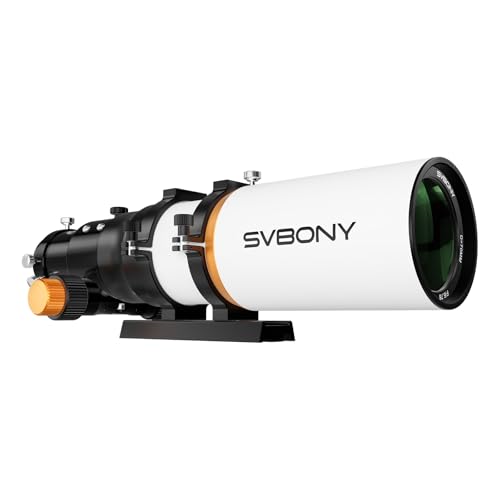
The SV503 refractor integrates a built-in field flattener to deliver a flat field with minimal edge distortion. It combines a 70mm aperture and f/6.78 with a design that reduces chromatic aberration for truer colors. Imaging users gain convenience by avoiding a separate field flattener while achieving quick, sharp results straight from focusing, making it a practical choice for those who want an all-in-one solution.
SVBONY SV193 Focal Reducer 2″ 0.8X

The SV193 2″ 0.8X focal reducer also functions as a field flattener, designed to work with SV503 and other compatible refractors. By reducing focal length from typical f/7 to around f/5.6, it widens the field of view while maintaining edge-to-edge sharpness. This is a compelling option for imaging at full-frame or near-full-frame sensors that require a wide, flat field with high fidelity across the frame.
Buying Guide
Key considerations when selecting a field flattener or reducer for a refractor system:
- Back focal distance: Confirm required spacing between the device and camera sensor (often 55mm ± a few millimeters). This affects compatibility with your telescope and T-ring setup.
- Focal ratio compatibility: Some flatteners are optimized for f/5–f/7, while reducers can shorten effective focal length. Match your telescope’s native focal ratio to the device’s design.
- Connection threads: Check if the item uses common threads (M42, M48, M63) and whether adapters are included. This reduces installation friction with camera bodies and row of accessories.
- Integrated vs. separate: Built-in flatteners reduce clutter and simplify alignment, but modular flatteners offer flexibility for multiple scopes. Consider your current and future rig plans.
- Optical quality and coatings: Look for low-distortion designs and multi-coatings that minimize reflections and chromatic aberration, preserving color accuracy.
- Weight and balance: Heavier front-end accessories can affect mounting stability and balance on small to mid-size mounts. Factor in counterweights if needed.
- Compatibility with full-frame sensors: If using a large sensor, edge performance becomes critical. Choose flatteners proven to maintain flat fields across wide formats.
- Ease of use: Some users prefer all-in-one refractors with built-in flatteners for quick setups, while others favor upgrade paths with modular components for customization.
- Maintenance and compatibility updates: Check for manufacturer guidance on firmware or compatibility notes, especially for newer cameras and mount interfaces.
Across these options, users typically seek improved edge sharpness, reduced field curvature, and a smoother integration with their imaging train. Evaluate your telescope model, sensor size, and target astrophotography goals to determine whether a dedicated field flattener, a reducer, or a combined solution best serves your imaging workflow.