For photographers and videographers, a reliable geared tripod head ensures precise framing, repeatable angles, and smooth motion. This guide evaluates top 3‑axis geared heads, highlighting precision micrometer controls, load capacity, and build quality. Whether you shoot architecture, astro, or macro, these selections help you lock in exact positions and reduce wobble during long exposures or panning.
| Product | Brand | Max Load | Why It Stands Out |
|---|---|---|---|
| K&F CONCEPT 3-Way Geared Tripod Head | K&F CONCEPT | 13.2 lbs / 6 kg | Millimeter micrometer adjustments with CNC aluminum construction |
| Benro GD3WH 3-Way Geared Head | Benro | — | Independent geared pan, tilt, and roll with stable, lightweight design |
| NEWER TH15 3-Way Geared Head | NEEWER | 13.2 lbs / 6 kg | Arca‑type QR plate compatibility and precise micro adjustments |
| VERTECFOTO Geared Tripod Head | VERTECFOTO | 11 lbs | Smooth fine tuning and wobble-free performance |
| Manfrotto MHXPRO-3WG Geared Head | Manfrotto | — | Ergonomic knobs and reliable XPRO style gearing |
K&F CONCEPT 3-Way Geared Tripod Head (Model With Millimeter Micro-Adjustment)

The K&F Concept geared head offers high-precision micrometric knobs for independent three‑axis control, enabling fine adjustments for pan, tilt, and roll. Its CNC aluminum construction emphasizes durability and consistent durability under demanding shoots. A notable capability is its stated load capacity of 6 kg (13.2 lbs), which supports most DSLR and mirrorless systems with standard lenses. Fine gear tuning, damped movements, and a precise finish make it a strong option for star photography, architectural work, and studio setups requiring repeatable framing.
Benro GD3WH 3-Way Geared Head

Benro’s GD3WH introduces independent geared adjustments for pan, tilt, and roll axes, delivering ultra‑fine positioning with minimal drift. Large control knobs with separate release mechanisms enable quick rough positioning before dialing in precise angles. The head’s magnesium alloy body, combined with carbon steel and bronze gears, yields a durable yet lightweight build that travels well in the field, making it a versatile choice for travel photography, studio shoots, and video work that requires repeatable articulation.
K&F CONCEPT 3-Way Geared Tripod Head, Aluminum Alloy, 6kg Capacity
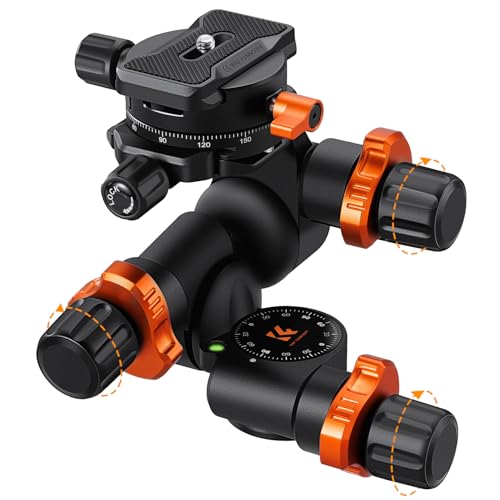
This variant emphasizes an all‑metal build and millimeter micro‑adjustment across three axes. The aluminum alloy design aims to balance strength and weight, providing a stable base for architectural, astro, and product photography. Four bubble levels and three angle scales help align shots precisely, while 0.1° micro-adjustment supports tight frame control. The 6 kg load rating (13.2 lbs) aligns with common DSLR and mirrorless setups, enabling longer focal lengths and heavier lenses with confidence.
NEEWER 3 Way Geared Tripod Head TH15

NEEWER TH15 combines a three‑axis geared design with two bubble levels and an Arca‑type QR plate for broad compatibility. It features a short center column configuration to improve lifting efficiency and flexibility, plus damping friction control for smooth, consistent movement. The fine-tuning knobs offer precise adjustments, and the overall construction aims to balance rigidity with user‑friendly operation, making it suitable for astrophotography, macro work, and landscape framing where repeatable angles matter.
Buying Guide: Key Purchase Considerations And Comparisons
When selecting a geared tripod head, consider how you shoot most often and the weight of your gear. Here are essential factors to weigh:
- Load capacity: Match the head’s rating to your camera + lens weight plus any accessories. If you frequently mount telephoto lenses or long exposures, a higher rating is beneficial.
- Geared precision: Look for millimeter or 0.1° micro‑adjustment capabilities. Independent axis gearing reduces drift and improves repeatability for panoramic framing or astrophotography.
- Build quality: An all‑metal body (aluminum, magnesium) with robust gears promotes durability in field use. CNC machining generally indicates tighter tolerances and smoother operation.
- Arca compatibility: Arca‑type quick release plates and dovetails simplify swap‑out across compatible tripods and heads, increasing versatility.
- Ergonomics: Large, well‑textured knobs with secure locking mechanisms reduce fatigue during long shoots. Quick release and coarse adjustment features are helpful for setup speed.
- Weight and portability: Heavier heads are sturdier but less portable. Balance weight against the tripod’s stability and the typical shooting context (studio vs. outdoor travel).
- Versatility: Some heads blend ball‑head benefits with geared precision. If you frequently shoot from tight spaces or need quick repositioning, consider a hybrid design.
In practice, the best choice depends on your workflow. For astro and landscape work with mid‑to‑heavy cameras, the K&F CONCEPT geared options deliver precise micro adjustments with solid aluminum construction. Benro’s GD3WH emphasizes ultra‑fine control across all three axes with a lighter weight profile, suitable for travel and field shoots where mobility matters. NEEWER’s TH15 combines Arca compatibility and thorough damping for smooth motion, a practical option for editors and videographers relying on repeatable pans. VERTECFOTO focuses on smooth tuning and wobble resistance, important in macro setups where tiny shifts can ruin a shot. Manfrotto’s MHXPRO‑3WG offers trusted ergonomics and a familiar gear interface for users already invested in the brand ecosystem.
Additional considerations include whether you need a short center column for increased vertical reach, the availability of spare gears and accessories, and how easy it is to maintain precision over time. If you shoot in constrained spaces, a compact head with precise micro‑adjustments is usually preferable. For studio setups, a heavier, more rigid model may be worth the extra weight for maximum stability. Finally, ensure your tripod’s load rating and stability align with the chosen head to prevent any tipping or drift during long exposures.