The market for mirrorless camera gimbals offers a range of options that balance payload, portability, and intelligent tracking. This guide highlights five standout models favored for their stabilization performance and versatility across Canon, Sony, Panasonic, Nikon, and Fujifilm setups. Each pick is evaluated on grip feel, setup speed, tracking accuracy, and adaptability to vertical shooting for social content. Use the linked products to compare real-world performance and compatibility with your camera/lens kits.
| Product | Brand | Payload | Notes |
|---|---|---|---|
| DJI RS 3 Mini | DJI | Up to 2 kg (4.4 lbs) | Ultra-compact; vertical shooting ready |
| DJI RS 4 | DJI | Up to 2 kg (4.4 lbs) | Second-generation vertical shooting; smooth axis arms |
| FeiyuTech SCORP Mini 3 Pro Kit | FeiyuTech | Up to 4.4 lbs | AI tracking 4.0; detachable handle and lighting kit |
| DJI RS 4 Mini | DJI | Up to 2 kg (4.4 lbs) | Auto axis locks; intelligent tracking |
| FeiyuTech SCORP Mini-3-Pro | FeiyuTech | Up to 4.4 lbs | AI tracking 4.0; detachable remote handle |
DJI RS 3 Mini: Ultra-Portable 3-Axis Gimbal
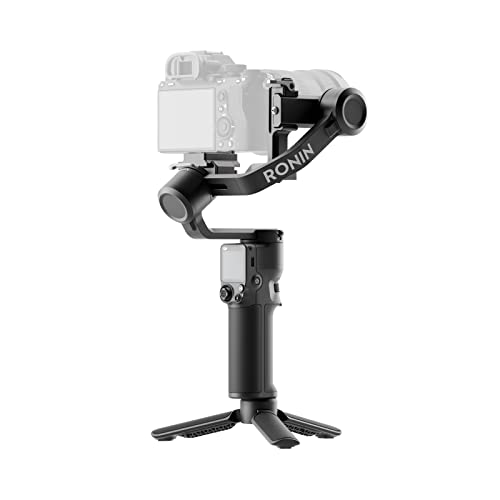
The DJI RS 3 Mini offers a lightweight yet capable stabilization solution for mirrorless camera setups. Weighing just 795 g (1.75 lbs), it is designed for travel-friendly handling without compromising performance. Its robust motors support a maximum payload of up to 2 kg (4.4 lbs), enabling a broad range of camera and lens combinations. Bluetooth shutter control simplifies capture workflows, letting you trigger photos and videos directly from the gimbal after initial pairing. This model excels for on-the-go shoots and compact rigs where portability matters.
DJI RS 4: 3-Axis Gimbal With Vertical Shooting

The DJI RS 4 introduces advances in vertical shooting with a new horizontal plate that quickly converts to vertical mode, streamlining content creation for social media and vertical formats. The device features a joystick mode switch to toggle PF, PTF, and FPV modes, enabling tailored control for each shot scenario. Teflon-coated axis arms reduce friction for smoother balancing, delivering precise and reliable stabilization across dynamic scenes. This model is well-suited for enthusiasts and pros alike seeking rapid mode changes without adding accessories.
FeiyuTech SCORP Mini 3 Pro Kit

The SCORP Mini 3 Pro Kit bundles everything needed for versatile on-the-go filming. It includes an extension rod, carry case, fill light, and an articulating arm, expanding creative options for high-angle or low-angle shots. AI Tracking 4.0 provides rapid subject following with a 0.003s response time and a tracking range of up to 39 ft, improving chances of keeping fast-moving subjects in frame. The detachable handle doubles as a remote controller, enabling flexible filming configurations without tethering you to the main gimbal body.
DJI RS 4 Mini: Auto Locks And Smart Tracking

The RS 4 Mini pairs fast setup with reliable tracking. Auto axis locks simplify balancing and trigger-ready shooting, particularly beneficial for fast-moving scenes or time-limited shoots. Its Intelligent Tracking Module keeps subjects framed as you orbit or move through complex compositions. A refined balancing system with Teflon-coated axis arms ensures smoother operation and reduced resistance during quick camera angle changes, supporting smoother footage in dynamic environments.
DJI RS 4 Combo: Vertical Shooting Ready

The RS 4 Combo extends the RS 4 feature set with enhanced vertical shooting capabilities and a 2nd-generation shooting profile. Its vertical-ready plate and refined joystick controls support quick adaptation to different framing requirements. The combination emphasizes stable, broadcast-ready footage with smooth transitions between horizontal and vertical formats, suitable for professional video work and high-quality social content alike.
FeiyuTech SCORP-C2 Gimbal

The SCORP-C2 combines a high payload up to 7.7 lbs with built-in AI tracking 4.0. Designed for DSLR and mirrorless cameras, it supports full-frame setups and is built to handle heavier rigs without compromising balance. The combination of robust motors and intelligent tracking makes it a solid option for professionals who need reliable performance on larger camera/lens configurations, with straightforward vertical shooting support.
FeiyuTech SCORP Mini-3-Pro Gimbal

The SCORP Mini-3-Pro integrates a four-in-one design supporting mirrorless cameras, compact cameras, smartphones, and action cameras. AI Tracking 4.0 offers a rapid 0.003s response time with 360° infinite tracking within an extended 18-meter range. The detachable grip and remote control expand creative flexibility for solo operators, enabling high-angle or distant-shot control without sacrificing balance or control accuracy.
Buying Guide: Key Purchase Considerations And Comparisons
- Payload and camera compatibility: Choose a gimbal that can comfortably handle your camera body and lens weight, plus any accessories you routinely use. If you plan to upgrade gear, consider models that offer higher payload allowances.
- Stabilization quality and motors: Look for high-torque motors and smooth balancing across axes. Reducing friction with coatings like Teflon can improve setup speed and stability during rapid moves.
- Vertical shooting and quick mode changes: If you shoot for social media or vertical formats, prioritize gimbals with native vertical shooting or fast, tool-free transitions between orientations.
- Tracking and intelligent features: AI tracking accuracy, response time, and range influence how reliably the gimbal follows subjects in dynamic environments. Ensure compatibility with your camera ecosystem and any apps you rely on.
- Setup speed and ergonomics: Auto locks, detachable handles, and lightweight designs speed up setup for on-the-fly shoots. Ergonomics affect comfort during extended sessions.
- Accessories and expandability: Kits that include extension rods, fill lights, or remote controls add versatility for both indoor and outdoor shoots. Check for compatibility with future upgrades or different shooting scenarios.
- Portability vs. feature set: If travel is a priority, favor compact models with strong stabilization capabilities. Heavier, feature-rich options may be preferable for studio or field work where payload and performance balance matters.
- Budget and use-case alignment: Align features with your typical shooting style—vlogging, cinematic events, landscapes, or action sequences. Prioritize the features that directly impact your workflow and outcomes.