The following guide highlights five drones that are well-suited for infrared imaging projects and other aerial duties. These models emphasize high‑resolution cameras, stable flight, GPS positioning, and long flight times, giving you solid options for infrared work when paired with an appropriate camera or thermal sensor. Use this overview to compare capabilities, form factors, and control features before selecting a drone for infrared applications.
| Product | Brand | Key Camera/Imaging | Max Flight Time | Notable Feature |
|---|---|---|---|---|
| LAKSAKI GPS Drone with Camera for Adults 4K | LAKSAKI | 4K UHD with 110° wide-angle | 50 mins | GPS Auto Return, 5G FPV |
| X-shop Foldable Drone with 1080P Camera | X-shop | 1080P HD, real-time FPV | 30 mins | Gesture control, 3 speeds |
| DJI Mini 4K Drone | DJI | 4K Ultra HD, 3‑Axis Gimbal | 31 mins | Under 249 g, wind resistance |
| OBEST RC Drone With Screen On Controller | OBEST | 1080P camera, large remote screen | 12–15 mins | Brushless motors, 5-inch display |
| Autel EVO MAX 4N V2 | Autel | Starlight/ Thermal/ Wide/Night Vision Cameras | ~42 mins | Extreme night vision, ABX41-D battery |
Note: This article focuses on drones with strong imaging capabilities and flight stability—important when integrating infrared sensors or cameras as an external payload. Availability and specifications may change; always verify compatibility with infrared gear before purchasing.
LAKSAKI GPS Drone With 4K UHD Imaging
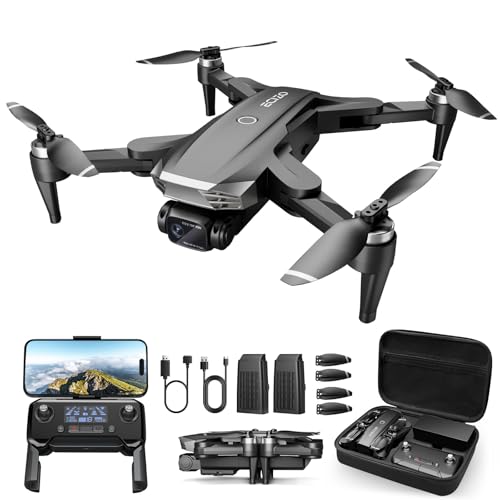
LAKSAKI’s drone centers on a built‑in 4K camera with 110° wide, adjustable lens for expansive aerial views. The 5G FPV link ensures smooth live streaming and reduced latency, which is helpful when framing infrared imagery or geotagging thermal data. GPS Auto Return provides reliable recovery, even if signals weaken or the battery runs low. Two intelligent batteries extend flight time toward fifty minutes, while a brushless motor system delivers stability in varying conditions. A foldable design adds portability for field use in infrared surveys or environmental monitoring.
Key features include: 4K UHD recording, adjustable lens angles, 5G FPV transmission, GPS auto return, dual batteries, and wind-stable brushless motors. The drone is designed to be accessible for beginners yet capable enough for more advanced aerial work, including integration with external infrared sensors when paired appropriately.
X-shop Foldable Drone With 1080P Camera
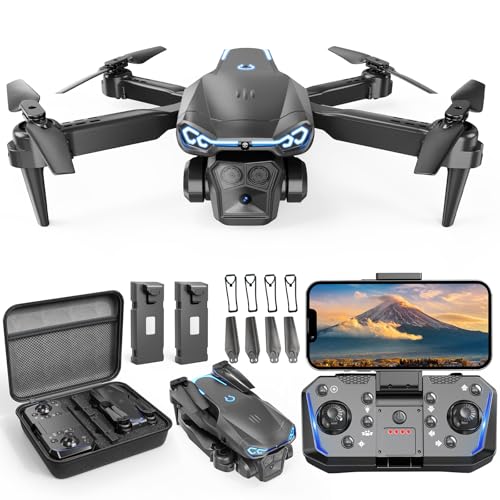
Designed for beginners and casual flyers, the X-shop drone offers a 1080P HD camera with real‑time FPV. The drone includes one‑key takeoff/landing, altitude hold, and a headless mode to simplify flight. It supports three speed levels and comes with two batteries for up to 30 minutes of flight time. Gesture and trajectory control add a fun layer of operation, allowing users to capture photos or videos with simple movements—useful when collecting quick infrared frames or scouting terrain for later thermal analysis.
With 360° flips and obstacle avoidance, this model balances ease of use with capable performance. While primarily a standard camera drone, its compact form and FPV feed support make it a practical option for fieldwork where infrared equipment is added later or used in tandem with a separate sensor payload.
DJI Mini 4K Drone With 4K Imaging
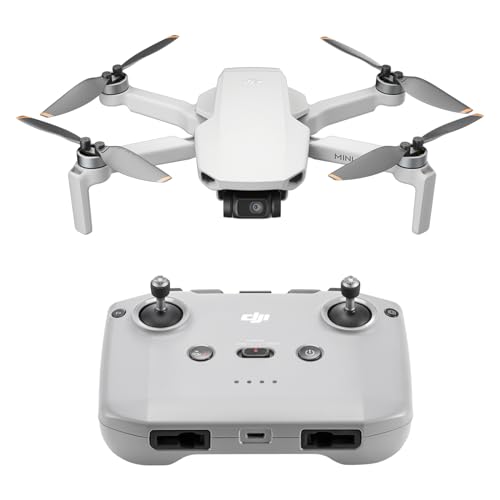
DJI’s Mini 4K offers a compact platform with 4K UHD recording and a 3‑axis gimbal for stabilized footage. The drone’s light frame (under 249 g) is optimized for easy regulatory compliance while delivering stable performance in windy conditions thanks to brushless motors. This model’s lightweight design is advantageous for remote infrared inspections where payload weight and battery life are critical considerations. The combination of high‑quality imaging, wind resistance, and efficient propulsion supports long flight times and reliable data collection.
Highlights include: 4K UHD imaging, wind resistance up to Level 5, minimal regulatory burden, and efficient brushless motors. It’s a practical choice for operators who want portable aerial capability with the option to add infrared imaging through external sensors or compatible payloads.
OBEST RC Drone With Screen On Controller
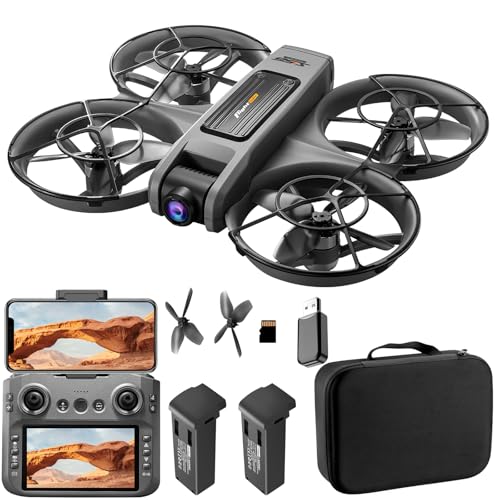
OBEST pairs a 5‑inch built‑in screen with a camera drone that uses capable brushless motors for stable performance. The model emphasizes a large remote display for real‑time feedback, which is practical when monitoring infrared imagery or thermal previews during flights. Flight time ranges from 12 to 15 minutes, which is sufficient for quick infrared sweeps or scouting missions. The drone’s dual‑camera setup options and easy controls are favorable for users who want straightforward operations and quick data capture in the field.
Key strengths include: a large screen on the controller, reliable brushless propulsion, and a safe, straightforward flight experience. This makes it a solid choice for beginners who plan to add infrared sensing to their toolkit gradually and want a user‑friendly platform to practice before upgrading payloads.
Autel EVO MAX 4N V2 Multisensor UAV
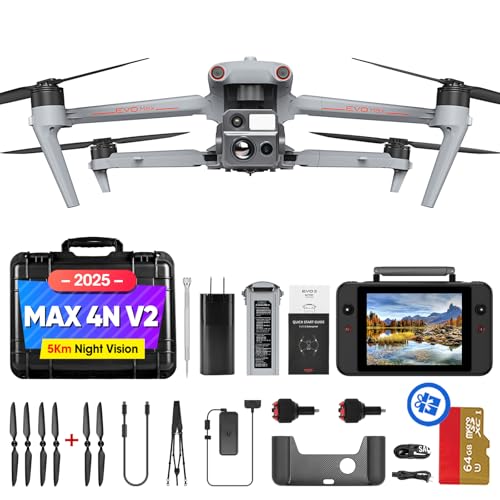
The Autel EVO MAX 4N V2 stands out with a suite of imaging sensors, including a starlight night‑vision camera, a wide‑angle main camera, and a thermal camera option. With 5KM night vision capabilities and robust obstacle avoidance, this platform is well‑suited to infrared imaging, surveillance, and search‑and‑rescue scenarios. The update to ABX41‑D batteries enables hot swapping and in‑place detection, supporting safer, longer operations in the field. The integration potential with thermal and infrared payloads makes this drone a top choice for professional infrared missions.
Important considerations for infrared work include: night vision capability, thermal imaging options, long‑range sensing, and reliable power management. The EVO MAX 4N V2 provides strong performance across these dimensions while maintaining rugged durability and advanced data collection features for demanding infrared surveys.
Buying Guide: Infrared‑Ready Drone Purchase Considerations
- Payload compatibility: Confirm whether the drone can carry an infrared camera or thermal sensor, including weight limits and mounting options. Some models offer native compatibility or official accessory support, while others require third‑party adapters.
- Flight time and power: Infrared surveys can be power‑intensive. Choose drones with longer flight times and efficient propulsion. Hot-swappable batteries or rapid‑swap designs help maximize field productivity.
- Stability and wind tolerance: Stable flight reduces motion blur and improves infrared data quality. Brushless motors and wind resistance ratings matter, especially for outdoor daytime or night flights.
- Sensor integration and control: Look for drones with high‑quality gimbals, real‑time feeds, and reliable app or controller interfaces. A strong FPV link helps you frame infrared captures accurately.
- Regulatory considerations: Weight, registration requirements, and Remote ID rules vary by region. Drones under certain weights may have fewer regulatory hurdles, but always verify local rules before flying for infrared operations.
- Camera quality vs. payload flexibility: A high‑resolution visible camera is not a substitute for a good infrared system. Consider models that balance good imaging with flexible payload options for future upgrades.
- GPS and safety features: Auto Return, obstacle avoidance, and secure geofencing improve mission reliability when infrared payloads are deployed in challenging environments.
- Cost of upgrade path: Infrared sensors and thermography cameras add to total cost. Plan a scalable setup with the potential for future tool upgrades rather than an all‑in‑one solution.