Electric system inspections benefit from high-contrast thermal imaging and reliable alarms. This guide highlights five infrared cameras well-suited for electrical inspections, balancing resolution, precision, and ease of use. Each option is tied to real-world diagnostics, helping technicians detect hot spots, loose connections, and insulation issues quickly and accurately.
| Product | Brand | Resolution | Key Strengths |
|---|---|---|---|
| TOPDON TC004 Mini Handheld Thermal Imaging Camera | TOPDON | 128×128 (TISR up to 240×240) | Smart alerts, long battery life, wide field of view |
| FLIR TG165-X Thermal Imaging Camera | FLIR | Unknown native, MSX enhanced | Commercial-grade, bullseye laser for area sizing |
| Flagfront 240×240 YXI96 | Flagfront | 240×240 | Temperature alarms, real-time readouts |
| HP96 Thermal Imaging Camera | HSFTOOLS | 96×96 (live upscales to 240×240) | Intelligent scene detection, 3-in-1 tool |
| FLIR C5 Compact Thermal Imaging Camera | FLIR | 160×120 thermal imager (true) with MSX | WiFi connectivity, MSX for detail |
Note: All five selections emphasize reliability in electrical inspections, with a focus on detecting hotspots, abnormal temperatures, and potential failure points. The table above provides a quick snapshot of capabilities to help you compare at a glance.
TOPDON TC004 Mini Handheld Thermal Imaging Camera

The TOPDON TC004 combines enhanced thermal clarity with practical features tailored for electrical inspections. Its imaging supports 128×128 thermal resolution that can be upgraded to 240×240 via TISR technology, delivering sharper details across electrical panels and components. With a 25Hz refresh rate, the images remain smooth during diagnostic sweeps, making it easier to identify hotspots and abnormal heat patterns. The device has a wide field of view (40° x 30°) and a long battery life—up to 15 hours—allowing extended site work without frequent recharges. On-screen alerts trigger when temperatures breach preset thresholds, and the camera automatically stores photos for documentation. Five color palettes—White Hot, Black Hot, Iron, Rainbow, and Red Hot—help optimize contrast for different materials and emissivity settings.
Practical advantages for electricians include automatic photo capture at alert events and 512MB of onboard storage (up to ~8,000 photos). The combination of smart alerts and manual capture makes the TC004 a flexible tool for electrical troubleshooting, wiring inspections, and equipment monitoring in both residential and commercial environments.
FLIR TG165-X Thermal Imaging Camera

The FLIR TG165-X is a commercial-grade option designed for building, HVAC, and electrical inspections. It features a 4,800-pixel infrared camera with a wide temperature range (-25°C to 300°C, or -13°F to 572°F), making it suitable for identifying hot spots in electrical panels and circuitry. A standout feature is MSX, FLIR’s patented technology that embosses visible details onto the thermal image to yield sharper, more easily interpreted pictures. The built-in bullseye laser helps mark the measurement area, enabling quicker localization of anomalies during inspections and facilitating more precise targeting of problem spots. Its compact form and user-friendly interface support rapid site adoption for electrical contractors and inspectors.
For electrical work, the TG165-X provides dependable performance with clear visualization of thermal patterns, helping to confirm issues like overloaded circuits or loose connections without extensive post-processing.
Flagfront 240×240 YXI96 Thermal Camera

The Flagfront YXI96 emphasizes high-resolution imaging and temperature monitoring with a 240×240 thermal sensor. Its 25Hz frame rate supports smooth video during inspections, and a built-in temperature alarm alerts users to abnormal heat sources in real time. The camera provides a wide temperature range from -4°F to 1022°F and allows users to adjust distance and emissivity for more accurate readings. Real-time temperature readouts for the highest, lowest, and center points help technicians quickly identify hotspots in electrical panels, motors, and distribution equipment, making it suitable for on-site electrical diagnostics, plumbing checks, and general energy audits.
With its emphasis on precise measurements and rapid alarms, the Flagfront model is a practical pick for technicians who need fast, reliable readings in busy electrical environments or limited-access spaces where quick decision-making matters.
HP96 Thermal Imaging Camera
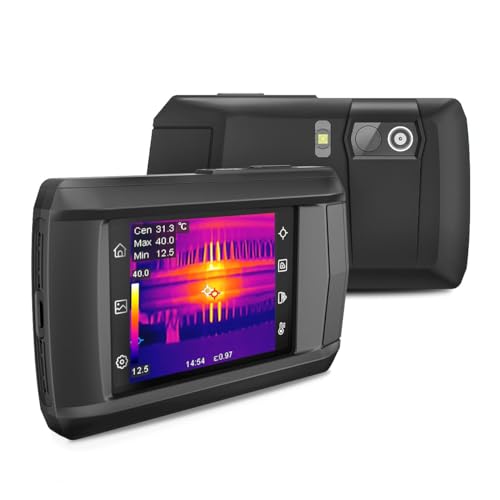
The HP96 from HSFTOOLS integrates intelligent scene detection with IntellFault technology to streamline electrical inspections. This 3.5-inch touchscreen device offers a straightforward UI for adjusting image modes, palettes, and temperature ranges. Its 50° field of view supports efficient scanning of large electrical panels, while onboard eMMC storage and microphone support live video and audio capture for thorough documentation. The device also includes a laser pointer and a lightweight build for easy maneuvering in tight spaces. Real-time anomaly detection is enhanced by automatic tracking of maximum, minimum, and center temperatures, enabling a rapid assessment of potential failures such as overheating connections or insulation gaps.
Users can utilize the 25Hz refresh rate to maintain smooth visualization during walkthroughs and leverage custom temperature thresholds to trigger alerts when anomalies appear, helping prevent equipment failures before they escalate.
FLIR C5 Compact Thermal Imaging Camera

The FLIR C5 is a compact, Wi-Fi-enabled thermal camera that delivers a robust balance of portability and performance. With a true 160×120 thermal imager (19,200 pixels) and MSX, the C5 provides clear images suitable for electrical inspections, electrical panels, and mechanical diagnostics. Its wireless connectivity supports rapid image transfer to a mobile device for sharing findings with clients or teammates. The MSX enhancement adds visible detail to heat maps, improving the interpretability of complex electrical assemblies. While compact, the C5 remains capable of identifying subtle temperature differences that indicate poor connections, loose terminals, or degraded insulation around electrical equipment.
Buying Guide
When selecting an infrared camera for electrical inspections, consider these factors:
- Resolution and image clarity: Higher resolutions (e.g., 240×240) yield more detail for small electrical components and tight spaces. The boost from 128×128 to 240×240 is particularly useful for panel work and small conductors.
- Temperature range and accuracy: A wide range (from sub-freezing to very hot) helps detect both cold and hot spots. Look for ±2°C or better accuracy for reliable diagnostics in electrical systems.
- Frame rate and real-time visualization: A 25Hz refresh rate offers smooth live viewing, which is helpful during scanning and when identifying transient heat sources.
- PTZ and measurement tools: Features such as lasers for area sizing, center/high/low temperature readouts, and adjustable emissivity improve measurement accuracy on diverse materials.
- Alarms and data capture: On-device temperature alarms and automatic photo/video capture streamline reporting and documentation for audits or client records.
- Portability and battery life: Handheld devices with extended battery life reduce downtime in the field and support longer inspection sessions.
- Software ecosystem and firmware updates: Cameras with updatable firmware and accessible software help you keep up with the latest features and improvements.
All five models covered in this article cater to a range of budgets and use cases, from compact handheld units to more feature-rich commercial-grade cameras. Consider the scale of your projects, the environments you work in, and how you plan to document findings when choosing the best infrared camera for electrical inspections.