Concert photography demands gear that can adapt to fast-changing lighting and dynamic stages. The right lenses help you capture intimate moments on the crowd floor and sweeping wide-stage moments without missing the next cue. Below is a curated guide featuring five versatile lenses tested for concerts, from telephoto reach for distant performers to macro-capable kits for close-up textures. Each option pairs portability with optical quality, making it easier to shoot pro-looking images in varied venues.
| Product | Brand | Key Strength | Link |
|---|---|---|---|
| Xenvo Pro Lens Kit | Xenvo | 0.45x wide, 15x macro, LED light | https://www.amazon.com/dp/B01A6D2JVI?tag=ginarogersph-20 |
| APEXEL 36x Telephoto Lens | APEXEL | 36x magnification for distant subjects | https://www.amazon.com/dp/B0FQJL6YTP?tag=ginarogersph-20 |
| NEEWER 65mm Telephoto Lens | NEEWER | 65mm reach, detailed close-ups | https://www.amazon.com/dp/B0F5FW49DL?tag=ginarogersph-20 |
| MIAO LAB 28x Telephoto Lens | MIAO LAB | 28x zoom for distant stages | https://www.amazon.com/dp/B0FPQVXTVB?tag=ginarogersph-20 |
| Evil Eye 2-in-1 Telephoto + Macro | Evil eye | 2-in-1 with telephoto and macro | https://www.amazon.com/dp/B0FMN9JD5D?tag=ginarogersph-20 |
These picks balance reach, sharpness, and ease of use in low-light venues. When selecting, consider how often you shoot from the pit versus the back row, whether you need macro textures for stage details, and if you prefer clip-on versatility over dedicated camera-body lenses. The following sections detail each product’s strengths, typical use cases, and practical tips for concert assignments.
Xenvo Pro Lens Kit — Wide and Macro With LED

The Xenvo Pro Lens Kit merges a 0.45x wide-angle with a 15x macro, enabling dramatic stage-wide captures or tight close-ups of performers during quieter moments. Built with aircraft-grade aluminum and coated glass, the lenses resist ghosting and flare—valuable on bright stage lights. A clip system plus included LED light helps maintain exposure in dim arenas. This kit’s broad compatibility makes it a convenient option for editing on mobile devices or desktops after a show.
Use case: capture a sweeping performance from the back of the pit and switch to macro for instrument details like strings or textures on clothing. The TruView wide angle eliminates vignetting, preserving edge-to-edge clarity. The GlowClip LED light is useful for quick fill but should be used sparingly to avoid spill into the frame.
APEXEL 36x Telephoto Lens
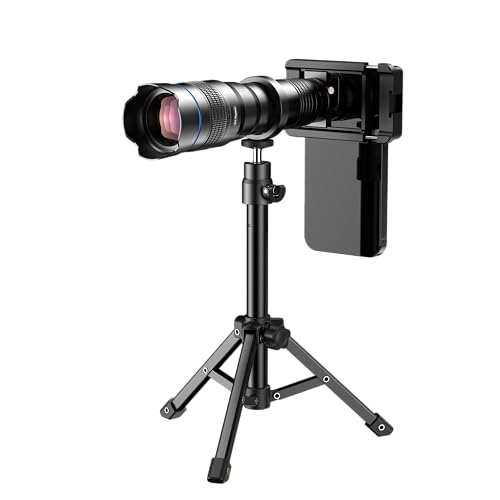
The 36x telephoto from APEXEL is designed for venues where you can’t approach performers closely. It delivers substantial magnification while maintaining edge-to-edge sharpness, helping you isolate a guitarist’s fingers, a vocalist mid-note, or a drummer’s stick motion from the rear seats. Because extreme magnification amplifies camera shake, pairing this lens with a tripod-adapter or higher shutter speeds is advisable in dim lights.
Practical guidelines: use faster shutter speeds to counter motion blur, and avoid relying solely on digital stabilization; the optical magnification benefits most when you’re close to the subject or have a stable vantage. This lens excels for artist portraits from the backline or side angles where distance is a constraint.
NEEWER 65mm Telephoto Lens

The 65mm telephoto from NEEWER offers a middle-ground reach suitable for mid-venue shots with tighter framing. With a 1.7x magnification and multi-coated glass, it can capture clear subjects like a guitarist in the spotlight or a lead singer during a falsetto moment. It’s designed for compatibility with various 17mm-thread backplates and cages, enhancing versatility in multi-camera setups often used at larger concerts.
Tip: avoid long distances where the lens’s depth of field and chromatic aberration may reveal limits; pair with a faster prime or place emphasis on stage details in closer zones to maximize image impact.
MIAO LAB 28x Telephoto Lens

The MIAO LAB 28x telephoto lens is designed to extend your reach while maintaining high-resolution detail. This lens leverages an advanced optical path to preserve color accuracy and sharpness across its zoom range, helping you render performers’ movements with crisp edges. It also doubles as a monocular for longer-range observations, which can be helpful during soundcheck recaps or crowd shots before doors open.
Best practices: shoot with a higher ISO in lower-light venues and compensate with steady handling. The lens is well-suited for capturing distant stage moments, such as a guitarist’s fingerwork on fast riffs or a drummer’s rapid stick work, when you’re seated toward the back of the arena.
Evil Eye 2-in-1 Telephoto & Macro

The Evil Eye 2-in-1 kit combines a telephoto and a macro option in one setup, offering flexibility for distant performers and close-up stage details. The TM6 TeleMacro lens uses an aluminum housing with multiple glass elements to minimize distortion and preserve color fidelity. This dual approach helps photographers switch from stage-wide compositions to intimate textures—such as instrument pickups, guitar strings, or backstage gear—without changing lenses frequently.
Usage guidance: use the telephoto for framing performers from the pit or balcony; switch to the macro for intimate shots of hands, strings, or textures on costumes during quieter moments or at close range. The included clip system supports quick on-the-fly changes that suit fast concert environments.
Buying Guide: Key Purchase Considerations
When choosing a lens kit for concert photography, consider reach, brightness, and stabilization. Telephoto options let you capture performers from a distance, while wide or macro capabilities help with stage ambiance and close-up details. Cross-check compatibility with your camera or smartphone, as some lenses rely on specific thread sizes or clip systems.
- Focal length and magnification: Higher magnification improves distance shots but may require steadier handling or a tripod. Pair with faster shutter speeds to freeze motion.
- Optical quality: Multi-coated glass and precision alignment minimize ghosting, chromatic aberration, and distortion—crucial under intense stage lighting.
- Ease of use: Clip-on designs reduce setup time between songs. A built-in LED light can aid exposure in very dark scenes, but use it judiciously.
- Versatility: 2-in-1 lenses (telephoto plus macro) offer flexibility for dynamic shows, eliminating the need to swap lenses during a set.
- Durability and portability: Aluminum housings and protective cases help in crowded venues. Light weight improves handling during long shoots.
- Device compatibility: Ensure the lens system fits your device (smartphone, DSLR, or mirrorless with appropriate adapters) to avoid compatibility issues in the moment.
In practice, a mix of telephoto reach for distant performers and a wide or macro option for on-stage textures yields versatile results. For venues with mixed lighting, prioritize lenses with minimal ghosting and good color fidelity to render vibrant stage lights accurately. Always test a new setup before a major tour or festival to understand its performance under your typical shooting conditions.