The selection below highlights top night-vision trail cameras that help you monitor wildlife after dark. Each model offers a mix of high-resolution photos, reliable motion sensing, and practical Wi-Fi or Bluetooth features for remote monitoring. Use this guide to compare options for hunting, wildlife observation, or property security.
Selected Products Overview
| Product | Brand | Key Feature | Night Vision Range |
|---|---|---|---|
| Dargahou 4K 48MP Trail Camera | Dargahou | 4K video, 48MP images, Wi-Fi control | Low Glow infrared |
| DEATTI Trail Camera 48MP 4K | DEATTI | Built-in hotspot, Wi-Fi/Bluetooth app | Night vision |
| Meidase P70 Trail Camera | Meidase | 64MP photos, 1296p video | No-Glow infrared |
| KJK Trail Camera | KJK | 36MP/2.7K, 130° wide angle | Low-Glow infrared |
| GardePro E6 Trail Camera | GardePro | Wi-Fi, 48MP, 1296P | No Glow night vision |
These picks cover a range of budgets and use cases—from remote wildlife monitoring to quick backyard checks—while prioritizing nighttime performance, quick triggers, and reliable connectivity.
Dargahou 4K Trail Camera

The Dargahou camera blends Ultra HD 4K video with 48MP stills to capture wildlife in crisp detail. It offers a 130° field of view and a rapid 0.05s trigger speed, ensuring you don’t miss quick animal movements. Wi-Fi and a companion app enable remote adjustments and real-time previews up to 33 feet, ideal for field setups or trail monitoring. Low Glow infrared LEDs provide clearer night footage while reducing animal disturbance.
Usage notes indicate robust outdoor performance with waterproof construction and motion activation. The combination of high resolution and fast trigger makes it a strong option for deer, coyotes, and other nocturnal species encountered near trails or hideouts.
DEATTI Trail Camera 48MP 4K

The DEATTI model emphasizes its own hotspot approach, enabling direct smartphone access over a short range without home Wi-Fi. It supports Wi-Fi/Bluetooth via a mobile app, with 2160P 48MP capture for sharp images both day and night. The device is described as waterproof and motion-activated with night vision, and a compact LCD screen aids in quick reviews on the camera itself. Note that it operates as a hotspot rather than connecting to a home network.
Pros include independent local connectivity and clear night imagery, while a potential limitation is the need to be within a close distance to connect with devices during surveillance sessions in poor weather.
Meidase P70 Trail Camera

The Meidase P70 is built around a high-resolution 64MP photo sensor and 1296p video capture, delivering striking detail in both daylight and the dark. A No-Glow infrared system offers discreet night vision, while motion-activated triggering helps you capture fleeting wildlife moments. The combination of a fast trigger with a long reach allows users to monitor distant activity in forests, fields, or near water sources.
Pros include excellent image quality and effective nocturnal capture. Considerations include ensuring ample storage and power for extended field runs, particularly in remote monitoring applications.
KJK Trail Camera
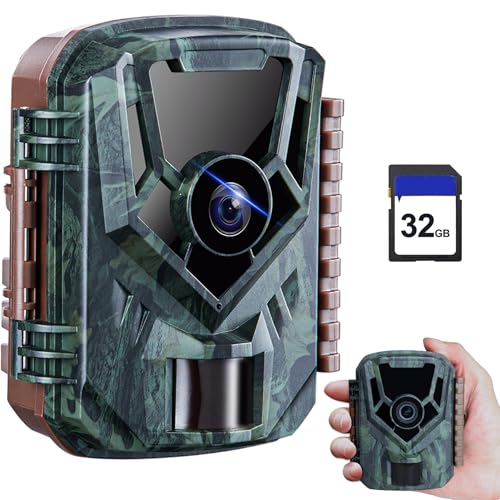
The KJK camera provides 36MP photos and 2.7K video with a 130° wide-angle lens, enabling broad scene coverage. Night vision uses Low-Glow infrared LEDs, ensuring that nocturnal movements aren’t masked by bright light. A 0.1s trigger time and a 1-3 burst option help capture rapid animal actions, while the 2.0” HD TFT screen offers quick on-site review. This makes it suitable for backyard monitoring, larger wildlife trails, and farm perimeter surveillance.
Strengths include fast response and wide-angle coverage; users should assess how the wider field of view matches their target species and terrain to avoid excessive data while browsing footage.
GardePro E6 Trail Camera

The GardePro E6 emphasizes a robust Wi-Fi connection with a dedicated app, minimizing the chance of disconnections through an antenna design that boosts signal reliability. It captures 48MP stills and 1296p video, paired with a wide 110° view angle to maximize coverage. The combination of high-resolution imagery, efficient encoding, and easy mobile access makes it a practical choice for scouting wildlife, monitoring deer activity, or securing property at night.
Considerations include ensuring the camera remains within Wi-Fi range for remote viewing and balancing power needs for longer field deployments, especially in remote locations where frequent maintenance is impractical.
Buying Guide: Key Purchase Considerations
- Night vision performance: Look for No-Glow or Low-Glow infrared LEDs with a stated range. For dense habitats, prioritize cameras with stronger IR ranges and adaptive exposure settings to maintain image quality in darkness.
- Resolution and video quality: Higher megapixels (e.g., 48MP) and 4K or 1296p video deliver sharper wildlife details, which helps with species identification and behavior analysis.
- Trigger speed and recovery time: Fast trigger speeds (0.1–0.2 seconds) and quick recovery reduce missed moments of fast-moving animals.
- Connectivity: Wi-Fi or Bluetooth on the camera plus a companion app enables remote setup and status checks. Note limitations like range and whether the camera can connect to home networks or only via hotspot.
- Power and storage: Consider solar power or built-in rechargeable batteries for long deployments, plus expandable memory cards to handle high-resolution footage.
- Durability and weatherproofing: IP67 or IP66 ratings and rugged housings are important for outdoor use in rain, dust, and cold conditions.
- Field of view and mounting options: A wide-angle lens (120°–130°) increases scene coverage, while tripod or strap compatibility affects placement flexibility.
- Data management: High-resolution footage requires substantial storage and efficient file formats. Ensure the camera supports easy transfer and backup workflows.
- Security and privacy: When deploying near private property or public land, ensure compliance with local regulations and consider privacy implications of camera placement.
Across these models, buyers should align features with their monitoring goals: overnight scouting, perimeter security, or educational wildlife observation. Evaluating the trade-offs between image quality, connectivity, and power options helps determine the best fit for specific environments and budgets.