In workforce settings and remote properties, reliable cameras that can operate without constant power or WiFi are essential. The following picks cover solar-powered, cellular, and remote-access options suitable for job sites, farms, cabins, and off-grid locations. Each product includes key features such as solar power, remote viewing, motion sensing, and durable build to help you monitor from anywhere.
Summary Table of Chosen Products
- Solar Security Cameras Wireless Outdoor — HOSAFE.COM — 2K/3MP, Solar Powered, 360° PTZ, Color Night Vision, PIR Sensor
- 4G LTE Cellular Trail Cameras 2K — GLEEMALL — 360° PTZ, Live Streaming, Solar Powered, IP65
- SEHMUA Trail Camera Cellular — 2.7K Live Streaming, Solar Powered, 4G, Remote Access
- Outdoor Security Camera Wireless — HOSAFE.COM — 2K Solar Powered, 360° PTZ, Color Night Vision
- MOES 4G LTE Cellular Security Camera — 2K, Solar Powered, 360° Viewing, VSIM
Solar Security Cameras Wireless Outdoor (HOSAFE.COM)
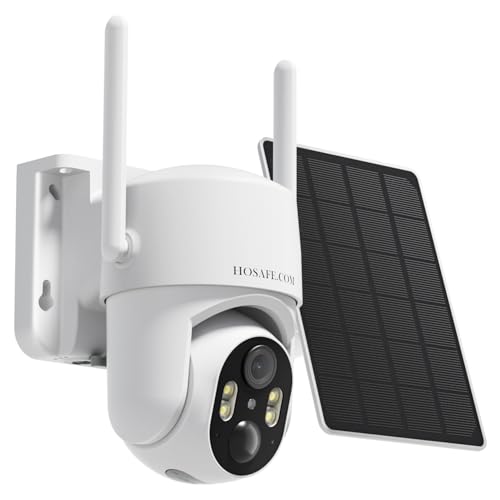
The HOSAFE.COM Solar Security Cameras Wireless Outdoor offers 2K/3MP video with a 360° PTZ view, designed for unattended monitoring. It pairs a 6W solar panel with a 9000mAh battery to deliver around-the-year operation, reducing maintenance in remote areas. The camera supports 2.4G WiFi, helping you avoid tangled cables while enabling remote access through a mobile app. Its PIR human detection helps minimize false alarms from animals, ensuring alerts are relevant. For job sites without steady power, this model provides consistent coverage with color night vision for nighttime identifications.
Key features include PIR motion alerts, color night vision, and a durable build suitable for outdoor use. The combination of solar power and a robust sensor array makes it a strong candidate for remote work sites where power access is limited. Users should note that this device does not support 5G WiFi, so ensure a stable 2.4G network is available near the installation location.
4G LTE Cellular Trail Camera 2K (GLEEMALL)

GLEEMALL’s 4G LTE Cellular Trail Camera is built for remote properties where WiFi isn’t reliable. It features a built-in SIM card with a 4G module, enabling live streaming, 360° PTZ movement (355° pan, 110° tilt), and a 2K live feed to your phone. The device is IP65 waterproof and solar-powered with a rugged exterior, designed to withstand outdoor environments. While the 4G connection provides consistent access to footage, activation requires a data plan for ongoing service after a trial period. Remote sharing via the app makes collaboration easy for teams working across locations.
Important considerations include the need for an active cellular plan, compatibility with local networks (Verizon/AT&T/T-Mobile), and the absence of WiFi connectivity. The solar panel helps maintain uptime, but installation should consider sun exposure and battery capacity for continuous operation. This model is well suited to monitoring large exterior spaces, farms, and job sites where power and network access are inconsistent.
SEHMUA Cellular Trail Camera — 2.7K Live Streaming

SEHMUA’s cellular trail camera delivers a 2.7K live feed with remote phone access. It supports Verizon, AT&T, and T-Mobile networks, enabling real-time monitoring even without local WiFi. The solar-powered design incorporates a 7800mAh battery and a 4W solar panel to keep power available in remote locations. IP66 waterproofing ensures durability in harsh outdoor conditions. The camera accepts SIM-based data transmission, offering a practical option for wildlife monitoring, property surveillance, and site access control where grid power is unavailable.
Users should plan for the SIM data plan requirements and ensure sufficient cellular signal at the installation site. The 2.7K resolution offers clear imagery for identification, though data usage and plan terms should be reviewed to avoid unexpected costs. This model is ideal for remote properties, farms, or cabins needing reliable cellular access without a fixed internet connection.
Outdoor Security Camera Wireless — 2K Solar Powered (HOSAFE.COM)

This HOSAFE.COM model combines solar power with 2K video quality and 360° PTZ functionality. Its PIR sensor supports precise motion detection with app-based notifications, helping to filter out non-threat activity. The solar panel and built-in battery enable extended operation without frequent charging, making it a solid option for remote job sites, construction zones, or rural properties. As with other solar cameras, 2.4G WiFi compatibility is highlighted, so ensure a stable 2.4G network is accessible at the installation point. The absence of 5G limits is a typical trade-off for solar-powered devices in this category.
Performance considerations include battery capacity relative to recording load, sun exposure for panel efficiency, and network reliability. The model’s 2K resolution provides good detail during daylight and night, especially when combined with color night vision features. Setup focuses on orienting the camera to maximize solar charging and field-of-view for the intended site coverage.
MOES 4G LTE Cellular Security Camera — 2K, Solar Powered
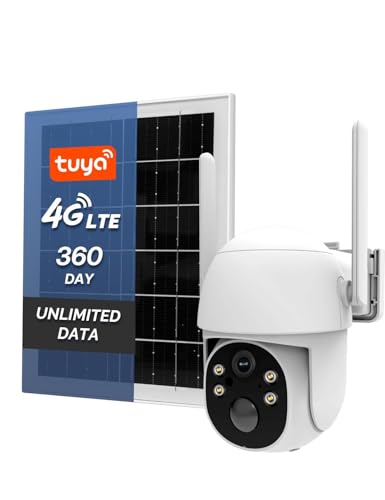
MOES offers a 4G LTE cellular security camera with a built-in VSIM data plan, bundled for up to 360 days of data usage in some packages. The solar-powered design includes a 7800mAh battery and a efficient solar panel to support continuous operation without wired power. The camera supports full remote monitoring, enabling access via a smartphone app to view live footage and playback. With 2K resolution and a full-color night vision feature, this model provides clear detail for perimeter surveillance, gate monitoring, and remote job sites. The included VSIM is device-specific and data plans are plan-based, so review terms before purchase.
When considering MOES, assess the total data commitment, network compatibility (AT&T/T-Mobile/Verizon), and expected field conditions. The solar power solution helps reduce maintenance, but users should confirm installation orientation and potential wildlife interference. The 2K video quality balances detail with bandwidth usage for efficient remote monitoring across larger areas.
Buying Guide: Key Purchase Considerations for Remote Job Site Cameras
- Power source: Solar-powered cameras reduce wiring needs and maintenance for remote sites. Check battery capacity and solar panel efficiency to match expected recording duration and weather conditions.
- Connectivity: Decide between 2.4G WiFi, 4G/LTE cellular, or both. Cellular models work where WiFi is unavailable but require a data plan. WiFi-based units depend on local network reliability.
- Video resolution and night vision: Higher resolutions (2K/2.7K/3MP) deliver clearer identification. Color night vision improves visibility in low light, but can increase bandwidth needs.
- Motion detection and alerts: Look for PIR sensors and configurable sensitivity to minimize false alarms from animals or weather. App notifications should be timely and include video clips when possible.
- Durability and weather resistance: IP ratings (e.g., IP65, IP66) indicate protection against dust and water. For off-grid sites, rugged housings withstand wind, rain, and extreme temperatures.
- Remote access and sharing: Apps that offer live view, playback, and multi-user access are valuable for teams or property managers monitoring multiple sites.
- Installation considerations: Consider sun exposure for solar models, camera mounting height, and angle to maximize coverage and minimize vandalism risk.
- Data plans and costs: Cellular devices depend on data plans. Confirm trial periods, renewal costs, and whether data is shared across devices.
- Integration and compatibility: Ensure the device works with your preferred ecosystems and software, especially if you manage multiple cameras across sites.
Overall, the best remote job site camera setup balances power independence with reliable connectivity and clear video when it matters most. Depending on location, a solar-powered unit with 2K or higher resolution and a cellular backup feature can provide continuous coverage with minimal on-site maintenance. For wired sites with solid WiFi, a 2.4G camera may suffice and offer straightforward installation. Evaluating your site’s power availability, cellular signal strength, and surveillance goals will guide you to the right combination of features.