Choosing the right solar panel for a battery-powered security camera can reduce maintenance and keep footage uninterrupted. This guide highlights top options designed for 5W to 6W charging, IP65 weather resistance, and adjustable mounting for optimal sun exposure. Each product is evaluated for compatibility with common battery-powered cameras, cable length, and ease of installation in American outdoor settings. Use the summary table below to compare key specs at a glance.
| Product | Brand | Power (W) | Cable Length (ft) | Adjustable Mount | Weatherproof |
|---|---|---|---|---|---|
| Solar Panel for Security Camera, 5W USB Solar Panel | YCTechCam | 5 | 9.8 | Yes | IP65 |
| Ring Solar Panel (2nd Gen), 4W | Ring | 4 | 16 | Yes | IP65+ |
| VERVERAY Solar Panel for Ring Cameras, 6W | VERVERAY | 6 | 16 | Yes | IP65 |
| 5W Solar Panel, DC 5V, USB-C | Catgod | 5 | 9.8 | Yes | IP65 |
| EverExceed 5W Solar Panel for Security Camera | EverExceed | 5 | 9.8 | Yes | IP65 |
Below are detailed profiles of five highly compatible options. Each section includes a clickable Amazon link, a product image, and a concise feature overview to help you compare at a glance.
YCTechCam 5W Solar Panel for Security Camera

The YCTechCam 5W solar panel is designed for rechargeable battery security cameras with micro USB or USB-C ports. It excludes plug-in cameras and is compatible with devices that use battery power. A long 9.8ft cable enables flexible placement, and the IP65 rating supports outdoor use in varied weather. The panel uses monocrystalline silicon for stable solar energy but does not include a camera battery, so it powers only cameras with built-in or replaceable batteries.
Key considerations: ensure your camera model supports battery power and USB-C or micro USB inputs; the panel’s weatherproofing supports rain, snow, and wind; plan mounting with the adjustable bracket to capture optimal sunlight throughout the day.
Ring Solar Panel (2nd Gen), 4W

Ring’s 4W solar panel is engineered to keep Outdoor Cam Plus and Stick Up Cam series charged, boasting up to 60 percent faster charging over the previous generation. It supports USB-C inputs and includes an adapter for older Ring Outdoor Cam models. Its integrated design emphasizes easy alignment and a clean installation, with a 16ft cable to position the panel where sun is ample while concealing the camera.
Considerations: compatibility with Ring camera generations, USB-C compatibility, and the need for an unobstructed sun path. The longer cable helps with discreet mounting in shaded zones if direct sun is limited.
VERVERAY Solar Panel for Ring Cameras, 6W

The VERVERAY 6W solar charger provides fast charging for Ring Stick Up Cam Pro and Ring Spotlight Cam Plus series. It supports both USB-C input cameras and barrel plug input cameras, with a 16ft cable and a 360°+90° adjustable bracket for flexible sun exposure. The design prioritizes compact framing to fit various outdoor mounting points while maintaining robust weather resistance.
Key considerations: verify camera model compatibility (USB-C vs barrel plug), mounting range, and cable length to place the panel in direct sun without compromising camera concealment.
Catgod 5W Solar Panel For Security Cameras

The Catgod 5W solar panel supports DC 5V cameras with micro USB or USB-C ports. It emphasizes IP65 waterproofing and a 9.8ft cable for flexible installation. The 360° adjustable bracket enables positioning toward optimal sunlight, helping maintain a steady charge. It excludes compatibility with several plug-in camera ecosystems, focusing on battery-powered models.
Considerations: ensure your camera is compatible with DC 5V input and has a battery, and plan the bracket orientation to match the sun’s path in your location.
EverExceed 5W Solar Panel for Security Cameras
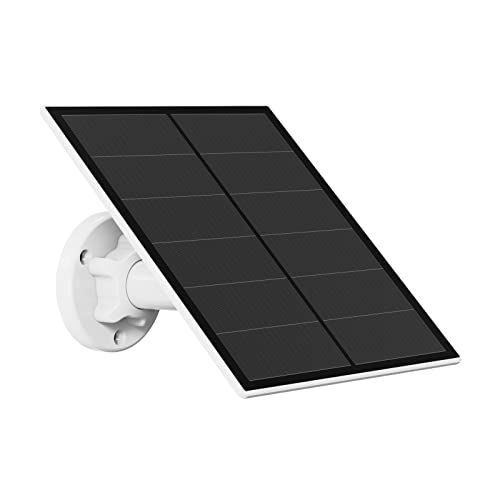
EverExceed’s 5W solar panel is designed for DC 5V rechargeable battery cameras with micro USB or USB-C ports. It is not compatible with Arlo, Blink, Ring, Google Nest, or Kasa cameras. The IP65 rating and 9.8ft cable provide outdoor reliability, with a 360° adjustable bracket for optimal sun exposure and flexible installation in varied environments.
Key considerations: confirm camera compatibility with battery power and port type; plan for the sun’s path and shade to maximize daytime charging across seasons.
Buying Guide: Key Purchase Considerations
Compatibility and camera type: Most panels are designed for battery-powered cameras with micro USB or USB-C inputs. They typically do not work with plug-in cameras or certain ecosystems (Arlo, Ring, Google Nest, etc.). Verify your camera’s power port and battery setup before purchasing.
Power output and cable length: A 4–6W panel is common for single-camera setups. Longer cables (around 16ft) provide placement flexibility but may require careful routing to avoid damage and maintain aesthetics. If you have multiple cameras, consider panels with higher output or a second unit as needed.
Weatherproofing and build quality: Look for IP65 or higher ratings for outdoor use, especially in areas with heavy rain, snow, or temperature swings. Durable housings and robust mounting brackets help ensure long-term performance.
Mounting flexibility: Adjustable brackets that rotate 360° and tilt help maximize sun exposure throughout the year. Confirm whether the included hardware fits your wall or roof installation and whether you need additional mounting accessories.
Visibility and concealment: If security concerns require discreet installation, choose panels with slim profiles and mounting hardware that blend with your exterior. Cable routing and panel placement should minimize tampering risk while staying accessible for routine maintenance.
Maintenance and efficiency: Monocrystalline silicon panels offer higher efficiency, especially in partial sun. Regularly inspect panels for dust, debris, and shade caused by nearby trees or structures. Efficient panels reduce the need for frequent recharging and battery replacements over time.
Brand ecosystem considerations: Some panels are optimized for specific camera ecosystems. Confirm compatibility with your camera model and the serial generation to avoid compatibility gaps or the need for adapters.