Birding from a distance requires reach, stabilization, and responsive autofocus. The following five superzoom models excel at capturing distant birds with detail, while offering practical features for field use. This guide compares each camera’s zoom range, image stabilization, video options, and connectivity to help you choose the right tool for field sketching, field guides, or nature photography enthusiasts.
| Product | Zoom Range | Key Strengths | Video / Raw |
|---|---|---|---|
| Nikon COOLPIX P950 | 83x Optical (24-2000mm) | Bird and Moon modes, built-in scene modes | 4K UHD, RAW |
| Nikon COOLPIX P1000 | 125x Optical (24-3000mm) | Extreme reach, strong low-light for its class | 4K UHD, RAW |
| Panasonic LUMIX FZ80D | 60x Optical (20-1200mm) | Post Focus and 4K Photo for flexible framing | 4K Photo / 4K Video |
| Nikon COOLPIX P1100 | 125x Optical (24-3000mm) | Dynamic Fine Zoom; broad coverage | 4K UHD, RAW |
| Canon Powershot SX70 | 65x Optical (21-1365mm) | High-resolution sensor; tilting screen | 4K Video |
Note: All models offer varying autofocus performance, weather sealing options, and battery life. Consider your typical birding distances, whether you need RAW format, and how important video capture is for your field notes when selecting a candidate.
Nikon COOLPIX P950: 83x Zoom for Distant Birds

The Nikon COOLPIX P950 centers on a long-reaching 83x optical zoom (24-2000mm). With 16 megapixels, you gain visible detail from mid-range to distant subjects. Built-in Bird and Moon modes tailor exposure and color for natural feather tones and sky contrast, while scene presets simplify field shooting. The camera supports RAW capture for post-processing flexibility and 4K Ultra HD video for documentary-style footage. Combining a solid stabilization system with a rotating LCD screen makes it easier to capture perched or flight shots from low angles or ground-level viewpoints.
Nikon COOLPIX P1000: The Extreme Reach Option

The P1000 extends reach to 125x optical zoom, equivalent to 24-3000mm. This makes it effective for distant raptors, waterfowl, and passerines at the edge of visibility. It includes Rock Steady dual-detect optical VR to reduce blur during long-range hand-holding and low-light moments. It captures 4K UHD video with stereo sound, and offers RAW capture for more advanced editing workflows. While the camera is sizable, its long focal length minimizes the need for multiple lenses while birding from hides or open trails.
Panasonic LUMIX FZ80D: 60X Zoom With Advanced Focus

The LUMIX FZ80D offers a 60x optical zoom range and a 20-1200mm equivalent, making it a versatile choice for birding scenarios from mid-range to distant. It features a Large LVF (Live View Finder) for glare-free composition in bright conditions and 4K video capability. Post Focus and Focus Stacking-style capabilities let you select the focal plane after a shot, helping when birds perch quickly or move between branches. The camera’s power image stabilization helps smooth out footage during long handheld sessions, and the 4K Photo feature enables grabbing high-quality stills from video clips.
Nikon COOLPIX P1100: Broad Coverage for Field Work

The P1100 pairs 125x optical zoom with a 24-3000mm equivalent focal range, offering flexible framing for birds across habitats. It supports a dynamic Fine Zoom option to extend reach while preserving details in distant subjects. With dual-detect optical VR, photographers gain steadier imagery in challenging weather or when tracking birds in flight. The camera records 4K UHD video and supports RAW capture, enabling post-processing adjustments for feather texture and color accuracy. Its build emphasizes a balance between long reach and portability for field use.
Kodak PIXPRO Astro Zoom AZ528: Budget-Friendly Versatility
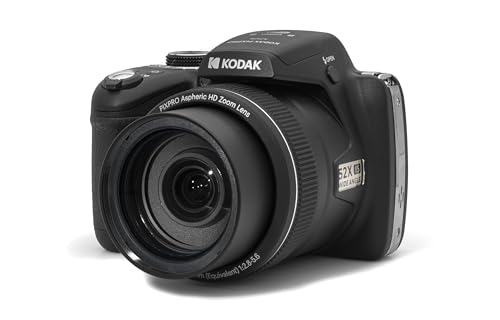
The AZ528 provides 52x optical zoom with a 24mm wide-angle lens, delivering a wide framing option for birding landscapes and group shots. It features a 16 MP CMOS sensor for detailed stills and up to 6 frames per second burst shooting, which helps capture flight sequences of birds in motion. 1080P Full HD video supports on-the-go content, and built-in Wi-Fi enables wireless control via mobile apps. While it sits at a lower price point, it still serves as a capable starter option for hobbyists focused on distance and field accessibility.
Buying Guide: Key Purchase Considerations
Zoom Range and Reach
Longer zooms allow you to photograph distant birds without disturbing them. For wildlife, 60x to 125x optical zoom is common, with dynamic zoom features to extend reach without added bulk. Consider how often you will need extreme reach versus portability.
Image Stabilization
Optical image stabilization and dual-detect stabilization help minimize blur at long focal lengths. Look for models with robust stabilization paired with a fast, accurate autofocus system to keep birds in frame as they move unpredictably.
Image Quality and RAW Support
Higher megapixel counts improve feather detail and crop flexibility. RAW capture preserves dynamic range for post-processing, a benefit when shooting in mixed lighting conditions common in birding habitats.
Video Capabilities
4K video is advantageous for documenting behavior and flight sequences. Check audio input options and whether external mics are supported, especially for field recordings in windy environments.
User-Friendliness and Ergonomics
Field use demands intuitive controls, a clear viewfinder, and a rotating or tilting LCD for low-angled shots. Weigh the camera’s size and weight against your comfort on long observation sessions.
Storage and Battery Life
Birding trips require reliable power and ample memory. Look for models with extended battery life and the ability to use fast memory cards to handle high-resolution bursts and 4K video.
Connectivity and Workflow
Built-in Wi-Fi or Bluetooth enables quick transfers to mobile devices for sharing field notes. Some cameras also offer tethered shooting options for studio-like workflows or field data logging.
Across these options, the Nikon P950 and P1000 stand out for extreme reach, while the Panasonic FZ80D provides advanced focus features at a more compact scale. The Canon SX70 delivers a balanced mix of zoom range and adaptability, and the Nikon P1100 offers broad coverage with solid stabilization. Your best choice depends on how far you typically shoot, how important RAW and 4K capabilities are, and how much weight you’re willing to carry on a day-long birding outing.