For probing the depths with remotely operated vehicles (ROVs), choosing the right underwater camera is crucial. This guide highlights five reliable options, spanning high-resolution 4K footage, robust low-light performance, long battery life, and strong waterproofing. Each pick is evaluated on imaging capabilities, depth rating, stabilization, and expandability to fit varied underwater missions. Use the quick-reference below to compare core specs at a glance.
| Product | Brand | Key Strengths |
|---|---|---|
| FIFISH V-EVO 4K60FPS Underwater Drone | FIFISH | 4K60, 360° mobility, removable SD card, robotic arm compatibility |
| FIFISH V6 Expert M200A Underwater Drone | FIFISH | 6 hours runtime, 4K camera, industrial case, robotic arms options |
| GLADIUS MINI S Underwater Drone | Chasing | 4K, 330 ft depth, 5 thrusters, long flight time with dual batteries |
| CanFish CamX Fishing Finders Camera (Grey) | Chasing | 1080P, 136° ultra-wide, 200 m depth, motion sensing |
| CanFish CamX Fishing Finders Camera (Mint Green) | Chasing | 1080P, 136° ultra-wide, 200 m depth, wireless charging |
FIFISH V-EVO 4K60FPS Underwater Drone
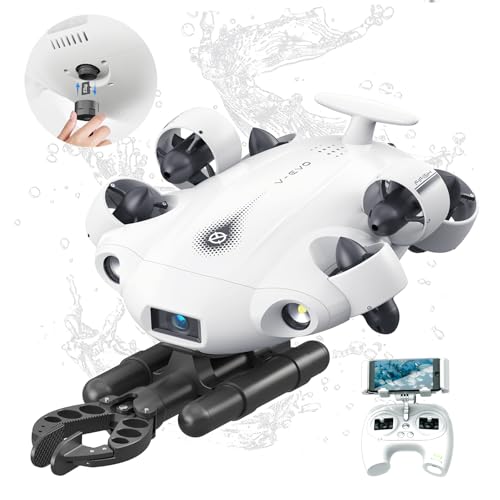
The FIFISH V-EVO 4K60FPS Underwater Drone combines a 4K 60fps camera with 360° omnidirectional movement, enabling smooth cinematic capture in tight underwater spaces. A removable SD card enhances storage flexibility for extended dives. The hydrodynamic design minimizes resistance, improving efficiency in currents, while compatibility with a variety of tooling expands mission versatility. This model is well-suited for professional footage, inspection tasks, and explorative dives where precise maneuvering matters.
FIFISH V6 Expert M200A Underwater Drone
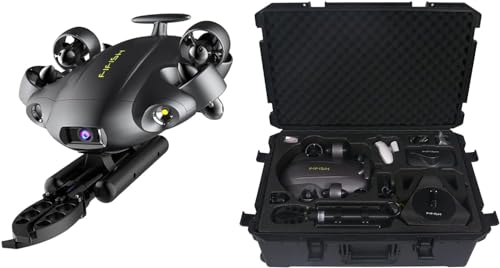
The FIFISH V6 Expert M200A delivers extended dive capability with up to 6 hours of operation. It features a 4K camera and a robust build designed for industrial applications, offering options like robotic arms and a protective industrial case. The advanced motor system and full 360° maneuverability provide reliable performance for tough inspection tasks, mapping, and exploration in deeper or challenging environments.
GLADIUS MINI S Underwater Drone

The GLADIUS MINI S combines 4K video with 12 MP stills, aided by a 1/2.3″ Sony CMOS sensor and dual 1200-lumen LED lights for low-light clarity. Its 5 thrusters enable stable motion and a maximum depth of 330 ft, with a compact form factor suited for quick inspections, underwater surveying, and detailed close-up work in constrained spaces. The drone supports long operation times and flexible data storage to suit field tasks.
CanFish CamX Fishing Finders Camera (Grey)

The CanFish CamX Grey offers 1080P imaging with a 136° ultra-wide view and 200 m waterproofing. It includes motion sensing and segmented intelligent recording, plus WiFi connectivity for remote monitoring and quick data transfer. The system is designed for versatile underwater scouting, fish-finding, and depth-mensing tasks while allowing easy data sharing to social platforms via the companion app.
CanFish CamX Fishing Finders Camera (Mint Green)
The Mint Green CanFish CamX mirrors the Grey variant with 1080P clarity and a 136° field of view. It supports motion sensing, intelligent recording, and wireless charging, empowering easy setup and efficient field use. The camera excels in shallow-to-mid-depth explorations, wildlife observation, and hobbyist-to-professional data collection for underwater environments.
Buying Guide
- Depth rating and pressure resistance: Assess the maximum dive depth you expect in your ROV work. Deeper dives require stronger housings and reliable seals to protect electronics.
- Camera resolution and stabilization: For detailed inspections and cinematic footage, prefer cameras offering 4K or higher and optical/electronic stabilization to minimize motion blur.
- Mobility and maneuverability: 360° omnidirectional movement, thrust efficiency, and hover stability matter for precise framing and navigation around objects.
- Power and run-time: Longer operation times reduce frequent repositioning and recharges. Check battery type, charging time, and available spare batteries.
- Storage and data handling: Removable SD cards or onboard memory, plus reliable data transfer options, are essential for field work and post-processing workflows.
- Expandability: Tool attachments, robotic arms, or modular components increase mission versatility for tasks like sampling, inspection, or manipulation.
- Environment and build quality: Corrosion resistance, IP ratings, and rugged design determine performance in saltwater, murky water, or debris-filled conditions.
- App and control integration: WiFi or controller connectivity, ease of use, and remote viewing capabilities influence real-time decision-making during dives.
When selecting an underwater camera for ROV use, weigh imaging performance against depth capabilities, endurance, and system expandability. The options listed here provide a spectrum of strengths—from high-resolution imaging and cinematic potential to robust industrial-ready builds suited for inspection and field deployment.