White balance cards are essential tools for achieving accurate colors in photography and videography. This guide highlights top options that help photographers set precise color balance, reduce color casts, and ensure consistent exposure across lighting conditions. The selections below cover pocket-friendly to larger format cards, all designed for easy calibration in the field or studio.
| Product | Brand | Card Size |
|---|---|---|
| Anwenk Grey Card White Balance Card 18% Exposure Photography Card 5X4 | Anwenk | 5×4 inches |
| Lightdow 12 x 12 Inch White Balance Grey Reflector Card | Lightdow | 12 x 12 inches |
| Anwenk Grey White Balance Card 18% (Large 5.3 x 7.28 inches) | Anwenk | 5.3 x 7.28 inches |
| Macolink White Balance Grey Card 18% (3.35 x 2.2 inches) | Macolink | 3.35 x 2.2 inches |
| Small Grey White Balance Card 18% (3.3 x 2.1 inches) | RENIAN | 3.3 x 2.1 inches |
Anwenk Grey White Balance Card 18% Scorecard
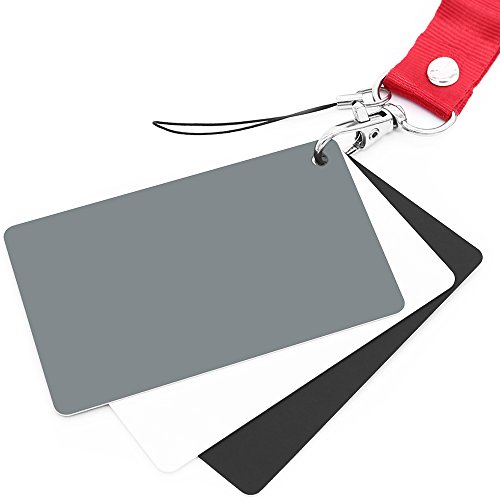
The Anwenk Grey White Balance Card 18% provides a neutral gray reference for accurate exposure and color balance. The card features a matte finish to minimize reflections and a non-reflective, waterproof construction suitable for field work. It is designed for use with any digital camera and works well for DSLR, video, film, and photography workflows. Card size is compact for pocket carry while offering consistent 18% gray reference for calibration.
Key features include a scratch-resistant surface, compatibility across camera systems, and a size that fits conveniently in a camera bag. This card helps calibrate white balance and exposure quickly in mixed lighting, enabling reliable post-processing results when using software like Adobe Photoshop or Lightroom.
Lightdow White Balance Reflector Card (Folded)

The Lightdow White Balance 18% gray reflector is designed to deliver consistent exposure measurements with a gray surface optimized for 17.8% reflectance and a 0.74 density. This card helps photographers reduce exposure error to within about 1/8 of a stop, supporting accurate white balance in a variety of lighting conditions. The folded version is compact for travel and includes a carry bag for easy organization in the field.
Its gray side provides a reliable reference point for color calibration, while the compact form is ideal for on-location shoots where quick, repeatable results are essential.
Anwenk 12×12 Inch Grey Card White Balance Card

This foldable, quick-balance gray card is designed for photographers who need fast calibration in dynamic environments. It includes a middle-printed target for 18% exposure correction with a maximum error deviation of 1/8 stop and a neutral white balance side on the reverse. The card is compact when folded and comes with a carry pouch for convenient transport.
Macolink 3.35×2.2 Inch 18% Gray Card

The Macolink Gray Card is a compact 3.35 x 2.2 inch 18% gray reference suitable for DSLR photography and video. The card’s durable, waterproof matte finish minimizes reflections, aiding quick white balance and exposure adjustments. Its small size makes it ideal as a pocket reference or on-camera calibration aid for on-location shoots.
RENIAN Small Grey White Balance Card

The RENIAN small gray white balance card includes a compact 3.3 x 2.1 inch reference card with a non-reflective surface and waterproof coating. This traveling kit is designed to calibrate color balance quickly across digital cameras and film, with an emphasis on portability and durability for field use.
Buying Guide: Key Purchase Considerations
- Card size and portability: Choose a size that fits your typical shooting workflow. Pocket-sized cards are convenient for on-location work, while larger cards can be easier to read in bright light.
- Material and finish: Look for matte, non-reflective surfaces to minimize glare, and ensure the card is durable and water-resistant for outdoor use.
- Reflection and exposure accuracy: A good gray card should target around 18% reflectance with minimal density variance to support consistent exposure calculations.
- Reflection on white balance sides: Some cards offer dual-sided designs (gray on one side, white balance on the other) for quick switching between calibration tasks.
- Compatibility: Ensure the card works across your camera system, including DSLR, mirrorless, and video workflows, and integrates with common editing software.
- Portability vs. readability: Balancing size and legibility in bright conditions is crucial. Foldable or double-sided cards can optimize space without sacrificing readability.
- Included accessories: Carry pouches, lanyards, or protective cases can extend the card’s lifespan in travel shoots.
- Durability and weather resistance: Field-ready cards should resist scratches and moisture to maintain color accuracy over time.
In practice, choose a card that aligns with your typical lighting environments—indoor studios, outdoor daylight, or mixed lighting. A foldable or larger card may be beneficial for studio calibrations, while a compact card works well for location shoots and quick white balance adjustments.