Photographers rely on neutral gray or white reference cards to achieve accurate color balance across lighting conditions. The following white balance card sets are among the most popular on Amazon and cover a range of sizes, materials, and features—from compact pocket cards to larger studio options. Each product is evaluated for reflectance accuracy, durability, portability, and compatibility with common editing workflows. Whether you shoot with DSLRs, mirrorless cameras, or video rigs, these cards help you quickly calibrate exposure and color so your images look true to life.
Summary Table
| Product | Brand | Size | Key Feature | URL |
|---|---|---|---|---|
| Lightdow 12 x 12 Inch Grey Card | Lightdow | 12 x 12 in | 17.8% reflectance; fast exposure calibration | https://www.amazon.com/dp/B00HT9MA1W?tag=ginarogersph-20 |
| Anwenk Grey White Balance Card 18% | Anwenk | 8.5 x 5.4 cm | Scratch resistant; portable | https://www.amazon.com/dp/B01DPV5PUA?tag=ginarogersph-20 |
| Whibal G7 Neutral White Balance Card | Michael Tapes Design | 2.1 x 3.35 in | Adobe Photoshop/Lightroom compatibility | https://www.amazon.com/dp/B004G3NW5M?tag=ginarogersph-20 |
| Macolink White Balance Grey Card | Macolink | 3.35 x 2.2 in | Durable, waterproof; matte finish | https://www.amazon.com/dp/B0753KBX1G?tag=ginarogersph-20 |
| Anwenk Large Grey Card 5×4 | Anwenk | 5 x 4 in | Large size; easy to set color balance | https://www.amazon.com/dp/B06XNQY6PJ?tag=ginarogersph-20 |
Lightdow 12 x 12 Inch White Balance Card

The Lightdow white balance reflector uses a neutral gray surface with an 18%-ish reflectance target designed to calibrate exposure and color under a variety of lighting. The folded version provides a compact option for field work, while its gray surface is specified with a reflectance of 17.8% and a density of 0.74. Light performance is described as allowing a maximum deviation in reflectance of 2% and an exposure measurement error up to 1/8 of an F-stop, which can help standardize captures when shooting outside controlled studios. The included carry bag aids transport between locations, making it suitable for on-location workflows.
Tooling considerations include its size, durability, and how well it folds into camera bags. This card suits photographers who prioritize a straightforward gray target with reliable, quick reference in diverse environments. Users should verify color calibration with their particular camera model and editing pipeline to ensure consistent results.
Anwenk Grey White Balance Card 18%
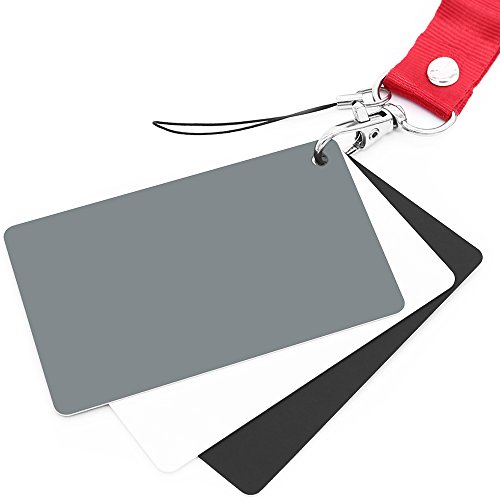
The Anwenk 18% gray card offers a compact, matte-finish surface designed to resist scratches while remaining non-reflective. It’s designed for universal compatibility with any digital camera and supports use in DSLR, video, and film workflows. Its pocket-friendly dimensions (8.5 x 5.4 cm) let photographers keep it on hand for quick calibrations, matching neutral gray under different lighting. In practice, the card helps standardize white balance and exposure, enabling consistent results across shoots. Waterproofing adds durability for field use, though care should be taken to avoid excessive bending that could affect flatness over time.
Considerations include portability, scratch resistance, and how well the card integrates with your editing workflow, especially if you mix color spaces or lighting conditions across projects.
Genuine Whibal G7 Neutral White Balance Card

The Whibal G7 is a compact, certified neutral white balance card designed for professional workflow compatibility. It emphasizes precise neutrality with high fidelity to perfect color balance, offering improved predictability when used with Adobe Photoshop and Lightroom. The smaller card size makes it suitable for on-the-go shoots, siting as a reliable reference for calibration in a variety of environments. The product positions itself as a dependable staple for photographers who require consistent color accuracy and fast in-camera calibration before editing.
When evaluating Whibal, consider how its integration with editing software aligns with your post-production routine and whether you need a pair of reference tools (one for on-set, one for studio) to streamline your process.
Macolink White Balance Grey Card

Macolink presents a compact 3.35 x 2.2 inch gray card advertised as durable and waterproof with a matte finish to minimize reflections. The card is designed to deliver a reliable neutral reference for rapid white balance adjustments, making it suitable for DSLR photography and video work. The durable construction and matte surface help reduce glare that can affect metering, while the compact size makes it easy to carry alongside lenses and other calibration tools. In practice, its performance hinges on the card remaining flat and clean to avoid color casts caused by surface imperfections.
Purchasers should consider how this card’s size influences handling during shoots, especially when paired with other color reference tools in a field kit.
Anwenk Grey Card White Balance Card 5×4
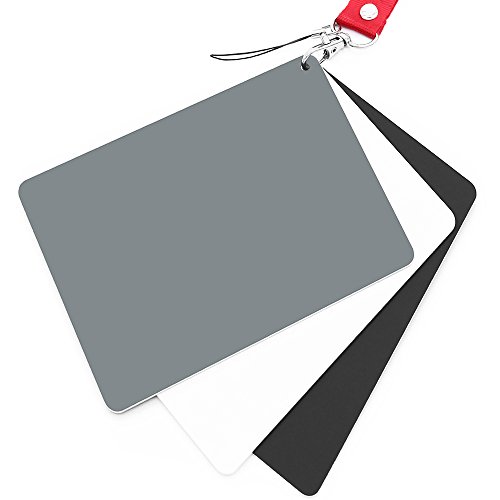
The Anwenk 5×4 inch gray card offers a larger surface area for easier color balance calibration, especially when working with moving subjects or busy lighting setups. The larger size can simplify in-camera white balance adjustments and provide a more visible reference in previews. It retains the matte, scratch-resistant finish and waterproof properties seen in other Anwenk cards, making it versatile for both DSLR and video workflows. It’s a practical option for photographers who want a balance between portability and a more generous calibration target.
As with all gray cards, ensure the card remains clean and flat to prevent slight color shifts in critical lighting scenarios and verify consistency with your preferred post-processing workflow.
Buying Guide
Key purchase considerations help compare white balance cards across brands and formats. Size, finish, and durability matter when you shoot in different environments, from studios to outdoor locations. Look for cards with a matte finish to minimize reflections, scratch resistance, and waterproofing if you work in challenging conditions. Compatibility with your camera system is essential, though most 18% gray cards work across models; verify whether your workflow relies on specific software profiles in Photoshop, Lightroom, or other editors. For video work, consider the card’s visibility on set and how easy it is to handle while filming. Finally, decide between compact pocket cards for travel and larger cards that provide a more forgiving calibration target during complex lighting.
Depth of field, tonal range, and exposure accuracy should be tested with your camera under your typical lighting setup. Ideally, maintain a small kit that includes at least one gray balance card, a white card, and a black card to cover a broad spectrum of calibration needs. If you regularly shoot in rapidly changing light, prioritize quick-release cards and reflective-free surfaces to keep post-production time minimal.