Looking for a budget-friendly point-and-shoot that captures reliable 1080p video and crisp photos without fuss? This guide highlights five affordable compact cameras ideal for beginners, families, and casual photographers. Each model is evaluated for who it’s best for, what makes it stand out, and a simple trade-off to consider before buying.
Buyer’s quick reference table
- Kodak PIXPRO FZ45 Black — Best for: everyday family moments with simple controls
- Kodak PIXPRO FZ45 White — Best for: shoppers preferring a light, clean look with the same features
- CAMKORY Digital Camera (4K, 64MP) — Best for: teens and budding vloggers wanting high-resolution video
- Kodak PIXPRO FZ55 Blue — Best for: travelers needing a bit more zoom in a compact body
- Ploomen 4K 56MP — Best for: beginners who want a flip screen and good anti-shake features
Kodak PIXPRO FZ45 Black — Overview

The Kodak PIXPRO FZ45 is a compact 16MP point-and-shoot with 4X optical zoom and a 27mm wide-angle lens. It records Full HD 1080p video and features a 2.7-inch LCD for easy framing. This model suits casual photographers who want reliable everyday shots without complexity.
- Best for: Families and travelers who want simple point-and-shoot operation
- Why selected: Balanced sensor quality and optical zoom in a compact form
Caution: Limited controls may not satisfy advanced shooters seeking manual settings or RAW capture.
Kodak PIXPRO FZ45 White — Overview
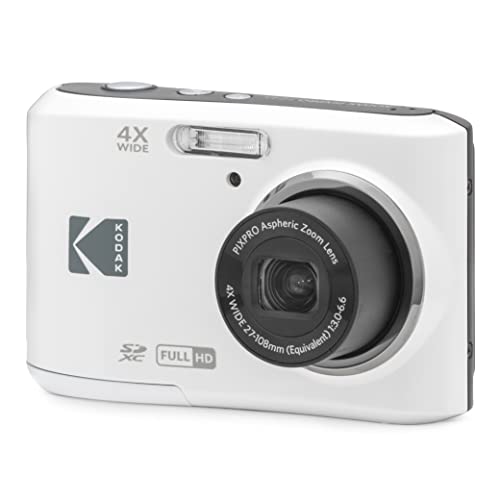
This white variant shares the same 16MP sensor, 4X optical zoom, and 27mm wide-angle lens as the black version. It’s ideal for shoppers who want a visually distinct option that blends with travel gear or gear for daily use.
- Best for: Color-themed kits or those who prefer a lighter camera aesthetic
- Why selected: Same performance in a different look for personal preference
Caution: Similar limitations apply regarding advanced features beyond auto mode.
Digital Camera, FHD 1080P With 16X Zoom — CAMKORY
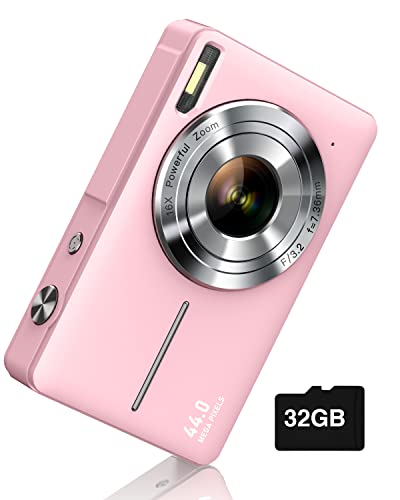
CAMKORY’s compact model emphasizes ease of use for beginners and kids, offering FHD 1080P video and 16X zoom in a portable design. Its ergonomic, simple controls are paired with a large LCD for straightforward shooting.
- Best for: Kids, teens, and beginners who want a straightforward, pocket-friendly option
- Why selected: Strong focus on user-friendly operation and long battery life in a petite body
Caution: The camera’s feature set prioritizes ease over high-end video stabilization and professional controls.
Kodak PIXPRO FZ55 — Compact with More Zoom

The FZ55 upgrades to a 16MP sensor with a 5X optical zoom and a 28mm wide-angle lens, maintaining Full HD 1080p video. It’s a solid choice for travelers who want a bit more zoom without stepping up to a larger camera.
- Best for: Travelers who want more framing flexibility in a compact package
- Why selected: Extra optical zoom improves distant-shot capability
Caution: Slightly heavier than entry-level PIXPRO models; still designed for casual use.
4K CAMKORY With Front & Rear Cameras
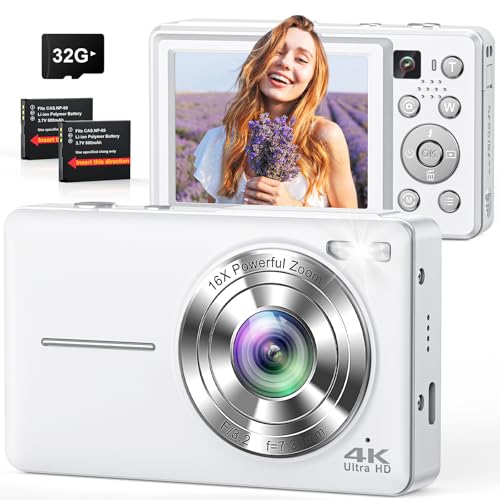
This CAMKORY 4K model offers a 64MP photo capability and dual front/rear cameras for selfies and vlogs. It also features 16X zoom and anti-shake stabilization, plus built-in flash for low-light moments.
- Best for: Teens and content creators who want versatile vlogging and selfies
- Why selected: Combines 4K video and high-resolution stills with dual-camera versatility
Caution: Higher resolution features can demand more storage and battery power, and may exceed what casual users need.
4K Travel Camera With Flip Screen — Ploomen
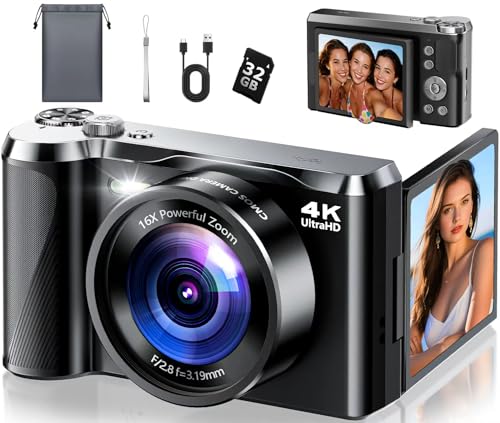
This 4K camera from Ploomen features a 56MP sensor with autofocus, a 3-inch 180° flip screen, and 16X zoom. It’s aimed at beginners interested in travel vlogging and self-recorded content, with a flip display for easy self-shooting.
- Best for: Beginners who want a front-facing display for vlogs
- Why selected: Flip-screen design helps with framing self-recorded content
Caution: 4K capture and large MP output can require more memory and processing power; keep storage in mind.
Buying Guide: How To Choose An Affordable Point And Shoot
- Sensor quality and megapixels: A 16MP sensor is typical in budget models and offers adequate detail for everyday prints and social sharing. High MP counts can help in cropping but don’t replace good lighting.
- Optical zoom vs. digital zoom: Optical zoom preserves image quality; digital zoom can degrade resolution. Choose models with 4X or 5X optical zoom for flexible framing without sacrificing sharpness.
- Lens and field of view: A 27mm–28mm wide-angle equivalent is common in budget cameras and helps capture group shots and landscapes. A wider lens is useful indoors or in tight spaces.
- Video capabilities: Full HD (1080p) is standard; 4K is offered on higher-end budget cameras and is a plus for future-proofing but consumes more storage.
- Ease of use: For beginners and kids, automatic modes and large LCDs simplify operation. Look for ergonomic designs and intuitive menus.
- Battery life and memory: Consider models that ship with larger capacity batteries and include an SD card. Longer battery life supports extended shooting on trips.
- Portability: Pocket-sized cameras are easiest to carry on travel; check weight and dimensions if you plan to hike or run daily errands with them.
FAQ
- What is the best affordable point-and-shoot for beginners? — Models like the CAMKORY or Kodak PIXPRO FZ45 are designed for easy operation and automatic settings, making them suitable for beginners and kids.
- Is 1080p video sufficient for most users? — Yes. For casual sharing and home videos, 1080p provides clear footage with wide compatibility; 4K is optional for future-proofing.
- Do I need manual controls on an affordable camera? — Not necessarily. If you primarily shoot in auto mode, a camera with simple menus and auto exposure suits most casual needs.
- Should I choose more zoom in a compact camera? — Yes, if you frequently shoot distant subjects or travel with limited space; optical zoom maintains image quality better than digital zoom.
- What should I consider about memory and battery life? — Ensure the kit includes a suitable memory card and batteries sufficient for typical travel days to avoid frequent recharging.
- Are these cameras good for kids? — Several models emphasize simple interfaces and robust builds, making them suitable as first cameras for children or teens.