If you’re shopping for low light performance without breaking the bank, these five digital cameras provide better results in dim environments than typical point-and-shoots. They’re suited for beginners, vloggers, travelers, and casual photographers who want brighter, more reliable images when lighting isn’t ideal. Below, you’ll find concise comparisons, why each model stands out, and practical buying tips to help you choose.
| Product | Best For | Why It Stands Out |
|---|---|---|
| W & O Digital Camera for Teens | Youth photography & casual vlogging | 180° flip screen, built-in fill light, beginner-friendly with 32GB card included |
| Saneen 8K Digital Camera | Travelers and creators needing high resolution | 8K video, 64MP photos, dual lenses, autofocus with webcam mode |
| FACLAM 4K Digital Camera | Budding vloggers | 4K video, 64MP photos, 180° flip screen, built-in Wi‑Fi for quick sharing |
| LOUM 8K Digital Camera | Selfies and on-the-go shooting | 8K/88MP, dual cameras, 5‑axis anti-shake, Wi‑Fi sharing |
| CAMKORY Digital Camera | Kids and beginners | FHD 1080p, simple controls, long battery life, portable |
W & O Digital Camera for Teens

The W & O camera uses a CCD sensor to deliver nostalgic, bright tones in casual shots. It’s best for beginners who want easy portrait lighting with a built-in fill light and a 180° flip screen for perfect selfies. The 32GB SD card comes ready to use, reducing setup friction for new photographers.
Best for: Teens or newcomers who want a simple, fun camera with front lighting and easy social sharing. Choose this if you value a ready-to-use setup and clear self-portraits in dim spaces.
Caution: CCD texture may not rival modern CMOS sensors for fine detail in very low light; performance is friendly for everyday use rather than professional-grade photography.
Saneen 8K Digital Camera

The Saneen camera emphasizes high resolution with 8K video and a 64MP photo capability. It features dual lenses and a webcam mode, making it versatile for streaming, travel vlogging, and detailed stills in moderate lighting. The 16X zoom helps capture distant subjects with clarity.
Best for: Enthusiasts and beginners who want flagship-like resolution and a flexible setup for both photos and video. Choose this if you need a multipurpose camera that can double as a webcam for meetings.
Caution: Using the 16X digital zoom can reduce image quality; plan to zoom selectively for best results.
FACLAM 4K Digital Camera

This model pairs 64MP stills with 4K video and features a 180° flip screen for easy self-recording and vlogging. Built-in Wi‑Fi supports quick transfers to smart devices, aligning with creators who want efficient editing and sharing workflows.
Best for: Beginners who want an all-in-one vlogging camera with straightforward controls and reliable autofocus in a compact form. Choose this if you value a simple, share-ready workflow.
Caution: While capable, it may not replace higher-end gear in extreme low-light situations; plan for added lighting when needed.
LOUM 8K Digital Camera

The LOUM camera offers dual cameras and 8K video with up to 88MP photos, plus a 2.8″ touch screen and 5-axis anti-shake. Its WiFi sharing enables quick distribution to devices for editing and posting. It suits creators who want stable footage on the go.
Best for: Selfie lovers and travel shooters who need reliable stabilization and fast wireless sharing. Choose this if you want high-resolution results and flexible framing for social media.
Caution: 8K video can demand more storage and power, so ensure ample battery and card capacity for long shoots.
CAMKORY Digital Camera
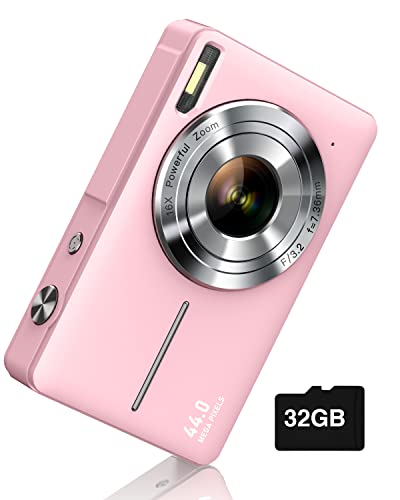
The CAMKORY camera is a practical entry-level option with FHD 1080p, 44MP photos, and a compact design. It’s especially suitable for kids and beginners who want an easy path to capturing everyday moments with minimal setup.
Best for: Kids and beginner photographers who want a simple, portable camera that’s easy to use right away. Choose this if you need a straightforward device for casual photography on the go.
Caution: It may lack advanced low-light features, so expect room-light photos to be the norm in darker environments.
Buying Guide
Key considerations when selecting a low-light-capable camera:
- Sensor Type and Size: CMOS sensors typically perform better in low light than CCD. Look for larger sensors or multi-pixel technology for brighter images.
- ISO Range and Noise Handling: A higher usable ISO with good noise control improves performance in dim settings without excessive grain.
- Lens Aperture: Wider lenses (lower f-number) gather more light, which is crucial in low light. Check optics options if swapping lenses isn’t possible.
- Stabilization: Optical or electronic stabilization reduces blur in dim conditions and during handheld shooting.
- Low-Light Features: Built-in fill light, scene modes, and post-processing options can enhance night shots and portraits.
- Video Capabilities: For vlogging, ensure reliable autofocus, good audio, and stable footage in low light.
- Battery Life and Card Capacity: Dim environments often require more power and storage; plan for extra batteries and larger memory cards.
- Connectivity: Wi‑Fi or USB-C transfers speed up sharing and editing workflows, especially for on-the-go creators.
Practical Scenarios
- Youth photography or casual social posts: W & O is advantageous for its ready-to-use setup and fill light.
- Travel or streaming: Saneen’s 8K with dual lenses and webcam mode offers flexible content creation.
- Vlogging on a budget: FACLAM’s 4K with Wi‑Fi and backlighting features provides a solid, beginner-friendly experience.
- Selfies and on-the-go shots: LOUM’s dual cameras and stabilization support stable, high-quality images in varying light.
- Kids and beginners: CAMKORY delivers a simple, portable option that’s easy to operate in low-light family photos.
Frequently Asked Questions
- What makes a camera good in low light?
– A larger sensor, wider aperture, good high-ISO performance, and stabilization help capture brighter, clearer images in dim conditions. - Is 8K video worth it for beginners?
– It offers exceptional detail, but it requires more storage and processing power; consider your editing setup before choosing. - Do I need interchangeable lenses for low light?
– Not always. A camera with a fast, bright built-in lens or a favorable fixed lens can suffice for casual use. - Should I prioritize video features or stills?
– If you create content for social media, prioritize reliable autofocus, stabilization, and easy sharing; for photography, prioritize sensor performance and noise control. - Can a child-friendly camera perform well in dim rooms?
– Yes, with built-in lighting and simple controls, these cameras can produce usable results in low light for kids and beginners.