Finding the right mega pixel IP camera means prioritizing image clarity, color night vision, and reliable outdoor endurance. This guide highlights five high-resolution options suited for homeowners, small businesses, and security enthusiasts who want detailed footage and easy integration with common NVR systems. Each product includes who it’s best for, notable features, and practical trade-offs to help you compare quickly.
| Product | Resolution | Best For | |
|---|---|---|---|
| Real HD 4MP Add-On Turret | 4 MP | Outdoor areas; color night vision | 65 ft color night vision; 108° FOV |
| Anpviz 4MP PoE Turret | 4 MP | DIY NVR setups; cross-brand viewing | Dual compression; PoE for simple cabling |
| Vonnision 5MP Fisheye | 5 MP | Wide-area coverage; indoor/outdoor | 360° panoramic view; mic input |
| Planet 5MP Dome | 5 MP | Indoor focus; remote focus/zoom | H.265; compact dome design |
| Inwerang 5MP PoE Bullet | 5 MP | Balanced outdoor VMS integration | 105° view; color night vision |
Real HD 4MP Add-On Full Color Night Vision Turret Dome IP Camera

Best for outdoor perimeter monitoring where color night vision enhances identification. This 4MP turret dome uses a 1/3″ CMOS sensor delivering up to 20fps at 4MP, with full-time color night vision up to 65 feet. It includes an IP66 enclosure for harsh weather and a wide 108° field of view with a 2.8mm lens. It is compatible with IK, LTS, and Uniview standalone NVRs and common third-party software like iSpy and Blue Iris. U.S.-based technical support is available. Caution: Not compatible with certain NVR brands such as Reolink, Lorex, Amcrest, Swann, oossxx, or Viewtron.
- Best for: Outdoor entrances, driveways, or storefronts needing color at night.
- Limitations: Compatibility is limited to specific NVR ecosystems; check your system first.
Anpviz 4MP PoE IP Turret Camera with Microphone
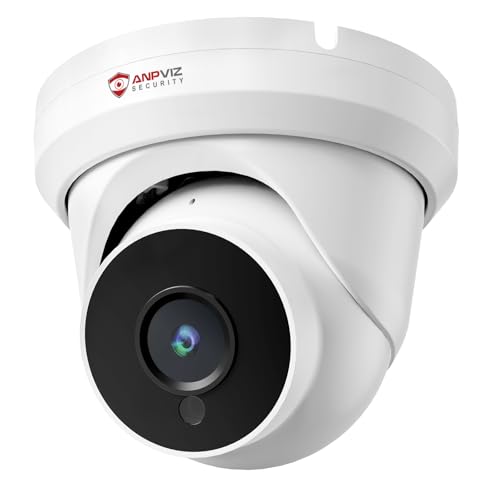
Choose this if you want a compact 4MP turret with PoE for simplified wiring and broad compatibility with popular NVRs. The camera supports 2560×1440 at 25fps and offers dual H.265/H.264 compression to save storage. It works with Onvif NVRs and third-party software like Blue Iris or Milestone, and is designed for both indoor and outdoor use with IP66 weather resistance. Caution: Performance depends on your NVR compatibility and network setup.
- Best for: DIY security installs needing simple power/data over a single cable.
- Limitations: Some advanced features require compatible NVRs or software.
Vonnision 5MP POE IP Fisheye Camera

Best for wide-area surveillance with a single camera covering a large area. This 5MP fisheye offers 360° panoramic viewing and includes microphone input for ambient audio. It supports PoE and works with multiple PoE NVRs, including Hikvision and EZVIZ. The camera is compatible with many NVRs after DHCP enabling, and it supports H.265/H.264 compression. Caution: The 360° view can create distortion at the edges; optimal placement is key.
- Better for: Large rooms, lobbies, or open outdoor spaces needing full coverage with minimal cameras.
- Limitations: Distortion at edges; may require a virtual tour or dewarping for some setups.
Planet H.265 5 Mega-Pixel Dome Camera

Best for discreet indoor surveillance with remote focus and 5MP resolution. This dome camera supports H.265 for efficient storage and streaming. Although the listing is concise, the camera is designed to deliver detailed images in an indoor setting where subtle aesthetics and low-profile installation matter. Caution: Specific features like remote focus/zoom and compatibility depend on the model’s firmware and your NVR ecosystem.
- Choose this if you need a compact, low-profile dome with modern compression.
- Limitations: May require compatible NVRs or firmware updates for full functionality.
Inwerang 5MP PoE IP Security Camera
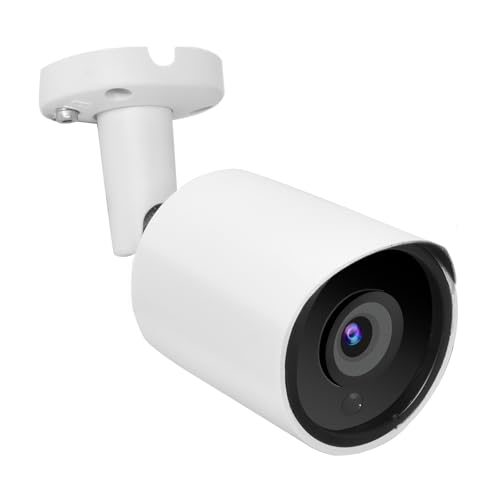
Best for outdoor installations requiring wide viewing with color night vision. This 5MP bullet camera offers 105° viewing with a 2.8mm lens and up to 80ft of night vision. It supports PoE, enabling a single Ethernet cable for power and data, and is compatible with third-party NVRs and software. Caution: Real-world performance depends on lighting conditions and camera placement.
- Best for: Outdoor entrances, yards, and perimeter monitoring where color night vision adds value.
- Limitations: Night vision range may be limited by ambient lighting and weather conditions.
Buying Guide: Mega Pixel IP Cameras
What to consider when selecting high-resolution IP cameras:
- Resolution and frame rate: Higher MP and fps improve detail; balance with storage and bandwidth.
- Lens type and field of view: 2.8mm lenses often yield wide coverage; fisheye provides panoramic views but edge distortion can occur.
- Power and connectivity: PoE simplifies installation by delivering power and data over a single cable.
- Weather rating and durability: IP66 or higher is preferable for outdoor use; dust and rain resistance matter in harsh climates.
- Compression standards: H.265/H.264 save storage; ensure compatibility with your NVR and software.
- Night vision: Check infrared vs. color night vision ranges; lighting conditions influence performance.
- Compatibility: Confirm NVR brands, Onvif support, and third-party software compatibility before purchase.
What arrangement works best?
- For perimeter security, use 4MP/5MP cameras with wide FOV and robust night vision.
- For large indoor spaces, a fisheye or dome with distortion correction can maximize coverage with fewer cameras.
- For DIY setups, prefer PoE cameras that pair with common NVRs and offer straightforward web viewing.
Frequently Asked Questions
- What does “mega pixel” mean in IP cameras? It refers to higher resolution sensors that produce more detailed images than standard HD.
- Do these cameras require a separate power source? Many, like the listed PoE models, use Power over Ethernet to deliver power and data over one cable.
- Is color night vision always better than infrared? Color night vision can aid identification in moderate lighting; in total darkness, infrared may be more effective.
- Will these cameras work with any NVR? Compatibility varies; check NVR brands, Onvif support, and firmware requirements.
- Can fisheye cameras be used for standard surveillance? Yes, but you may need dewarping and multiple viewpoints to avoid distortion.
- How should I place cameras for best results? Place them where lighting is steady, avoid glare, and ensure the field of view covers critical access points.