Finding the right micro four thirds lens depends on your shooting style and camera body. This guide highlights five top options that balance portability, image quality, and value for typical American shooters. Best for travel and street photography, portrait work, and versatile everyday shooting, these selections showcase modern MFT options from trusted brands. The list aims to help buyers choose fast primes, versatile zooms, and compact options that work well with Olympus, Panasonic, and other MFT-compatible bodies.
Product Comparison At-a-Glance
| Product | Type | Best For | Main Pros | Limitations |
|---|---|---|---|---|
| OM SYSTEM M.Zuiko 40-150mm F4.0-5.6 R | Telezoom | Travelers needing reach | 3.75x zoom, compact | Moderate max aperture |
| OM SYSTEM M.Zuiko 14-42mm F3.5-5.6 EZ | Standard zoom | Everyday carry, vlogging | Electric zoom, wireless control | Plastic build, slower at extremes |
| YONGNUO YN25mm F1.7M | Prime | Low light, street, portraits | Bright F1.7, compact | Manual/AF mix; build not flagship |
| Panasonic LUMIX G 25mm F1.7 | Prime | Natural perspective, low light | Lightweight, sharp at F1.7 | No IS integrated |
| 7artisans 18mm F6.3 | Ultra-wide | Landscape, architecture | Ultra-thin, affordable | Manual focus, slower aperture |
OM SYSTEM M.Zuiko 40-150mm F4.0-5.6 R Silver

This telephoto zoom covers a versatile focal range (40-150mm) with a compact design, making it a strong choice for travel, candid street work, and portrait sessions. The lens offers a modest maximum aperture (F4.0-5.6) which helps keep the size small while delivering usable performance in everyday lighting. The MSC (High-Speed Imager) autofocus helps with smooth tracking for moving subjects. Best for photographers who need reach without added bulk, especially on Micro Four Thirds bodies.
Best for: Travel shooters who want a lightweight, portable telephoto option; portraitists who value reach without sacrificing mobility. Consider this lens if you prioritize compactness and a versatile zoom range over ultra-bright apertures. Limitations: The variable aperture means slower performance in low light compared to faster primes.
OM SYSTEM M.Zuiko 40-150mm F4.0-5.6 R Black

This black variant shares the same focal range and compact philosophy as the silver model, offering a lightweight option with a similar 3.75x zoom. The lens is best for photographers who want a consistent, portable telephoto zoom with color options to match their camera body. The 80-300mm equivalent field of view makes it suitable for people subjects and distant details without bringing heavy gear. Limitations: The aperture range remains modest for difficult lighting conditions; pricing and availability may influence value in some markets.
OM SYSTEM M.Zuiko 14-42mm F3.5-5.6 EZ Silver

This compact standard zoom is designed for on-the-go shooting with a built-in motorized zoom feature for video. The wireless zoom control and fully rotating focus ring add convenience for vloggers and travelers who want quick, silent operation. Best for: Vloggers and casual shooters who favor electric, hands-free zoom control and a lightweight lens. Limitation: The range is relatively short compared to longer telephotos, so it’s less ideal for distant subjects.
YONGNUO YN25mm F1.7M
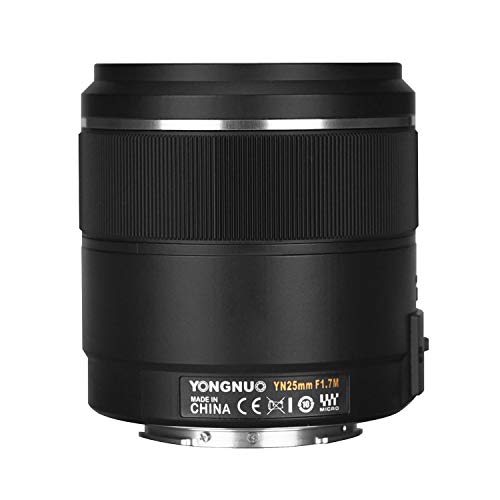
This compact prime delivers a bright F1.7 maximum aperture in a Micro Four Thirds mount, making it a strong option for low-light situations and portrait work with a natural 50mm-equivalent field of view. The lens supports both auto and manual focus modes, appealing to shooters who want flexibility. Best for: Street photographers and creatives seeking a fast prime with a small footprint. Caution: Build quality and autofocus performance may vary by unit; consider testing for reliability before heavy use.
Panasonic LUMIX G 25mm F1.7

This prime lens offers a natural perspective equivalent to 50mm on a full-frame sensor, with a bright F1.7 aperture for strong subject separation and low-light performance. It’s exceptionally light and compact, making it an ideal everyday carry lens for street and travel shooters. Best for: Photographers wanting a sharp, lightweight standard prime with strong low-light capability. Limitation: No built-in optical stabilization; pairing with bodies that have IS is advisable for handheld shots.
7artisans 18mm F6.3

This ultra-wide lens gives a wide perspective for landscapes and architecture at a compact price. With a slow F6.3 aperture, it favors environments with good light or longer exposure choices. Best for: Budget-minded landscape and architectural shooters who want wide coverage in a tiny package. Caution: Manual focus may be challenging in dynamic scenes; depth of field can be shallow at minimum focus distances.
Buying Guide: Key Considerations For Micro Four Thirds Lenses
What should I consider when choosing focal length?
Focal length defines how close subjects appear and how much of the scene is captured. Standard zooms (like 14-42mm) cover everyday shooting, while 25mm primes offer natural perspective and strong low-light performance. Telezooms (40-150mm) extend reach for portraits and distant subjects without adding bulk.
How important is aperture in Micro Four Thirds lenses?
Aperture affects light gathering and depth of field. Lenses such as the 25mm F1.7 prime provide brighter images and nicer background blur, especially in low light. Zooms in the F4.0-5.6 range are lighter and more portable but less forgiving in dim environments.
Should I prioritize size and weight?
Portability matters for travel and street work. Lenses like the 14-42mm EZ and the 40-150mm variants emphasize compactness and ease of carrying, while some primes deliver superior sharpness at a small price in weight.
What about autofocus and video performance?
For video and action, consider lenses with smooth autofocus (MSC) and quiet operation. Some models include electronic or motorized zoom to facilitate stable video work, while others rely on manual focus for precise control.
What is the best approach to building an MFT kit?
Consider combining a standard prime (around 25mm) with a versatile zoom (14-42mm or 40-150mm) to cover a wide range of shooting scenarios. Pairing these with a lightweight body creates a balanced, portable kit suitable for everyday use and travel.
Quick tips for buyers
- Match lens to your camera body’s mount and features to ensure compatibility and optimal performance.
- Balance portability with the need for reach or wide-angle coverage depending on your subjects.
- Assess future needs: will you shoot more portraits, landscapes, or street scenes?
FAQ
- What makes Micro Four Thirds lenses unique?
They are designed for two-camera systems with compact sensors, offering light, portable options and a wide range of focal lengths.
- Is F1.7 always better for low light?
Not always; aperture helps in low light, but subject distance and stabilization also matter.
- Are autofocusing zooms good for video?
Yes, especially models with motorized zoom or quiet focusing, which reduces noise in recording.
- Can I start with a single lens and expand later?
Absolutely. A standard prime or a compact zoom is a common starting point, then add a telephoto or wide-angle as needed.
- How important is weather sealing for Micro Four Thirds?
For outdoor work, weather resistance can add resilience, but many compact lenses lack comprehensive sealing.
- What are practical budget considerations?
Prime lenses often deliver better optical quality at lower prices than high-end zooms; weigh focal range against expected use and total kit goals.