Looking for a memory card that speeds up your workflow and protects your photos? This guide targets photographers and hobbyists who want dependable, high-capacity SD cards for 4K video, burst shooting, and everyday photo sessions. We highlight five top options, covering a range of speeds, capacities, and use cases—from fast offload for professionals to cost-effective solutions for casual shooters. A quick comparison table follows to help you compare at a glance.
| Product | Capacity | Best For | Speeds |
|---|---|---|---|
| SanDisk 128GB Extreme PRO SDXC | 128GB | Professional photographers/Videographers | Read up to 200MB/s; Write up to 90MB/s |
| SanDisk 128GB Ultra SDXC | 128GB | Casual to mid-range shooters | Up to 100MB/s |
| SanDisk 256GB Extreme PRO SDXC | 256GB | Heavy burst shooting/4K | Read up to 200MB/s; Write up to 140MB/s |
| Lexar 256GB CFexpress Type A | 256GB | 8K-ready workflows | Read up to 1750MB/s; Write up to 1650MB/s |
| SanDisk 64GB Ultra SDXC | 64GB | Budget-friendly everyday use | Up to 100MB/s |
The following sections provide in-depth details on each product, including who should buy them and why, plus practical caveats to consider before purchasing.
SanDisk 128GB Extreme PRO SDXC UHS-I Memory Card
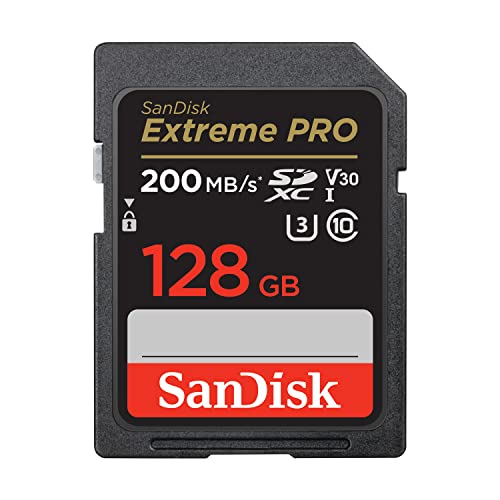
Best for professional photographers and videographers who require high write speeds for 4K recording and rapid offloads. This card offers up to 200MB/s read speeds and up to 90MB/s write speeds, powered by SanDisk QuickFlow Technology. It’s designed to pair with high-end readers for maximum performance, and is best when paired with compatible devices and readers. A potential limitation is that actual speeds depend on the host device and usage conditions.
Who it’s best for: Professionals needing fast offloads and reliable sustained performance for 4K timelines. Why selected: Combines high read and write speeds with a capacity that accommodates long sessions of RAW files and 4K footage.
Caution: Real-world speeds vary by device compatibility and file types; QuickFlow is available only on selected capacities.
SanDisk 128GB Ultra SDXC UHS-I Memory Card
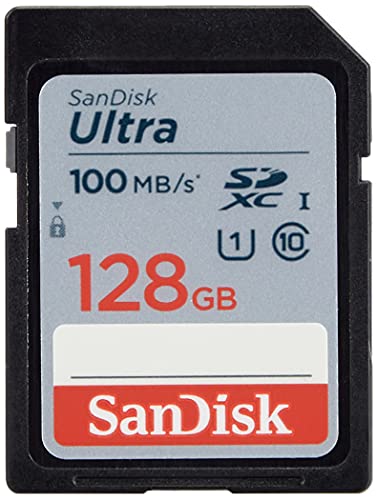
Best for casual to mid-range shooters who want dependable Full HD performance without breaking the bank. It provides up to 100MB/s transfer speeds and is well-suited for compact to mid-range point-and-shoot cameras. Real-world speeds depend on the host device and file attributes. This card excels for everyday photography and a lot of Full HD video capture.
Who it’s best for: Budget-conscious photographers and students who need reliable storage for day-to-day shooting. Why selected: Solid performance at a reasonable price with broad compatibility.
Caution: Transfer speeds may be lower on older devices or when handling large RAW files and video clips.
SanDisk 256GB Extreme PRO SDXC UHS-I Memory Card

Best for professionals who shoot long sessions or 4K/HDR video, and who need extra headroom for raw files and extended events. Supports up to 200MB/s read and up to 140MB/s write speeds depending on capacity and device compatibility. Ideal when used with high-speed readers to reach maximum capabilities. A caveat is that maximum achievable speeds require compatible hardware and environments.
Who it’s best for: Photographers and videographers handling large files or multi-hour shoots. Why selected: Higher capacity with top-tier offload performance for demanding workflows.
Caution: Actual performance depends on the host device and workflow complexity; QuickFlow may be limited to certain capacities.
Lexar 256GB Professional CFexpress Type A Silver 4.0 Memory Card

Best for photographers and videographers working with high-resolution formats, especially when paired with a CFexpress Type A USB 4.0 Reader. This card supports blistering read speeds up to 1750MB/s and write speeds up to 1650MB/s, with sustained writes up to 1300MB/s, making it suitable for 8K video and high-frame-rate bursts. It’s an excellent choice for professional studio work or on-set workflows where speed is critical.
Who it’s best for: High-end professionals using cutting-edge cameras and large-capacity projects. Why selected: Exceptional speed enables rapid offloads and smooth 8K workflows.
Caution: Requires compatible CFexpress Type A hardware to realize peak speeds; may be overkill for standard Full HD projects.
SanDisk 64GB Ultra SDXC UHS-I Memory Card

Best for budget-minded buyers who still want a reliable SD card for everyday shooting. With up to 100MB/s transfer speeds, it suits compact cameras and casual photo sessions where speed is not the primary concern. It’s a solid choice for hobbyists or students who need dependable storage without a high price tag.
Who it’s best for: Beginners and light enthusiasts seeking dependable storage. Why selected: Balanced capacity and performance at an accessible price point.
Caution: Not ideal for heavy 4K video or high-speed burst work where faster cards are advantageous.
SanDisk 128GB Ultra SDXC UHS-I Memory Card (Older Version)

Best for those who need a dependable 128GB option and are not concerned with the latest features. This older variant offers reliable performance for compact and mid-range cameras, with transfer speeds up to 120MB/s. It’s a practical choice when newer models are unavailable or unnecessary for existing equipment.
Who it’s best for: Budget-conscious buyers with legacy devices. Why selected: Proven performance with broad compatibility.
Caution: As an older version, availability and future support can vary; consider newer models for longer-term compatibility.
SanDisk 64GB Extreme PRO SDXC UHS-I Memory Card

Best for professionals who need a compact, high-performance card for 4K or burst-heavy shoots when size matters. It offers up to 200MB/s read and 90MB/s write speeds, with QuickFlow technology and compatibility with high-speed readers. It’s a strong option when you’re on location and need fast offloads from a smaller card.
Who it’s best for: On-location professionals who require maximum speed in a smaller form factor. Why selected: High performance in a compact capacity for fast workflows.
Caution: Limited capacity may require more frequent swaps during long shoots; consider pairing with larger cards for extended sessions.
Buying Guide: Memory Card Choices For Photographers
- Capacity and file type: If you shoot RAW or 4K video, choose higher capacities (128GB–256GB) to minimize swapping. For casual photography, 64GB–128GB can suffice.
- Speed class and performance: Look for UHS-I or CFexpress Type A with high read/write speeds. Prioritize read speeds for faster offloads; prioritize write speeds for smooth recording.
- Compatibility: Ensure your camera, laptop readers, and gear support the card type and maximum speeds advertised. Pair fast cards with a corresponding high-speed reader when possible.
- Durability and reliability: Consider cards with robust construction and reputable brands. Check warranty terms and data recovery support if available.
- Budget vs. needs: Balance capacity and speed with your workflow. For most professionals, higher-end Extreme PRO or CFexpress options justify the cost for efficiency.
Frequently Asked Questions
- What is the best memory card for 4K video?
– Cards with high write speeds (for example, up to 140MB/s or higher) and capacities like 128GB–256GB are ideal for 4K workloads. - Do I need CFexpress Type A cards?
– CFexpress Type A is beneficial for high-end cameras and workflows offering ultra-fast read/write speeds, especially for 8K or burst shooting. If your gear does not support CFexpress, choose high-speed SDXC UHS-I cards. - Is a higher capacity always better?
– Higher capacity reduces the number of card swaps during shoots but comes at a higher cost. Choose capacity based on your typical file sizes and shoot length. - How do I maximize card performance?
– Use a compatible high-speed reader, format cards in-camera when possible, and avoid filling cards to the very last megabyte to preserve performance consistency. - Are older memory cards still useful?
– Yes, for light use or older devices, but consider upgrading for demanding tasks like 4K and 8K to maintain efficiency.